⬤ WhatIsAGoodMother_Project Channel ⬤ WhatIsAGoodMother_Project Survey ⬤《一分鐘 *好媽媽* 心理法寶》頻道 ⬤ The Parental Values Study ⬤ Domestic Conflicts & Homicides: The Case of Hong Kong ⬤ Parenting Tips “Against A.I.” …
Hoideology.com, founded and produced by Dr. Katty (“Katy”) P. Ho, is a collaborative platform for publishing psychoeducational and research works developed by Dr. K. Ho and her team. Dr. K. Ho’s psychoeducational and research works aim to provide self-helpinformation based on scientific psychological research to help people enhance their understanding of psychosocial issues, clarify intrapersonal-interpersonal misconceptions, and gain useful techniques in resolving human conflicts toward potential and continuous growth, happiness, genuine confidence, and mental healthiness. Learn more …
Hoideology.com 由 Dr. Katty (“Katy”) P. Ho 創立和製作,是一個出版 Dr. K. Ho 及其團隊創作和開發的出版心理教育和研究作品的協作平台。她的心理教育和研究工作旨在提供基於科學性心理學研究的自救訊息,幫助人們增強對心理社會問題的理解,澄清人際間的誤解,並獲得解決人類衝突的有用技巧,以實現潛在和持續的成長、幸福、真誠的信心和心理健康。了解更多 …
《父母價值觀》研究 (Ho & Wong) (準備中; expected to be launched in 2026)
家庭衝突與謀殺:以香港為例 (中文) (準備中; 2025-)
「反轉人工智能」的父母教養技巧 (英中) (準備中; expected to be launched in 2026)
Introducing the WhatIsAGoodMother_Project Channel (WIAGM Channel), Season 1 — by Dr. K. Ho
Hi! This is Dr. Katty (“Katy”) Ho. I earned my Ed.D. in Educational Psychology from The Chinese University of Hong Kong, my M.Div. from Gordon-Conwell Theological Seminary, my M.A. in Psychology from Boston University, and my B.A. cum laude (Hons) in Psychology from The University of California at Berkeley. I have been in the field of psychology including research and teaching and ministry in the past 30 years of my career and am a former Lecturer of Psychology having taught many undergraduate and post-graduate courses in psychology at several higher-education institutions in Hong Kong (CityUHK, CUHK, EdUHK) for more than 13 years cumulatively. I am developing my The WhatIsAGoodMother_Project Channel to aim at providing psychoeducation regarding Parenting Research, Skills, and Effects to clients, students, professionals, and general readers/viewers anywhere in the world.
Having studied and taught psychology to many students in my career, I’ve come to be convinced that this statement is indeed true: Parenting Style (emotional attitude) is the building block to one’s psychological well-being and one’s development of mental-personality-interpersonal-marital-health problems and disorders.Better knowledge and understanding of the critical parent-child processes can help you learn how to prevent the development of those problems in your family, as well as enhance functioning within the family.
What do you expect to see on our Channel? We make two types of videos: Theoretical (Literature Review) PRESENTATION and COMMENTARY.
What is a Theoretical (Literature Review) PRESENTATION? In our WIAGM Channel’s Season 1 (2025/26), I was the author and creator of the scripts and PowerPoint slides for the videos, and video-editor of the video production (Ho & Chu, 2025, August 5; 2025, August 14; 2025, November 3; 2025, December 16); I invited Genie Chu, Undergraduate Research Apprentice majoring in Psychology and Philosophy at the University of Sydney, to recite the script with me. My scripts and PowerPoint slides aimed to provide adequate background information of the research literature (theory), research method, and research findings of the original authors’ work, which we reviewed.
What is a COMMENTARY? Our WIAGM Channel COMMENTARY was based on spontaneous (non-scripted) conversations/discussions between me and Genie. It was based on the several well-thought-through questions that Genie raised on the spot regarding the details of one specified Theoretical (Literature Review) PRESENTATION, plus my further explanation and clarification of those concepts that needed further explanation and illustrations through real-life examples and media (added in later on in the video-editing process). Besides linking concepts to real-life illustrations, in my video-editing, I also linked the cited research (the new) to related concepts in psychology (the old) to enhance learning. Season 1’s four COMMENTARIES are Episode 3 on “What is Parenting Style,”Episode 4 on “What are Parenting Style Effects,”Episode 7 on “What is Parental Coldness,” and “What are Rejection Copers-Systems.” To honor Genie’s leadership, I made her first author of Season 1’s COMMENTARIES.
I hope that you will enjoy learning with us through these videos, each of which have been carefully-crafted by myself using just traditional human annotation method by my own brain and hands, zoom recording, traditional PowerPoint slides making, and the CapCut video-editing software, and appreciate our joy in presenting and discussing these serious topics, in order that you will also learn about these critical theories/research and their implications and applications!
Please leave us your constructive comments on our videos! We’ll appreciate your feedback greatly!
COMMENTARY*: Copers and the Systems of Parental Rejection 評論*: 父母拒絕的應對者與系統
Note. * What is a COMMENTARY? Our WIAGM Channel COMMENTARY is spontaneous conversation based. In each, Undergraduate Research Apprentice Genie Chu raises 3 to 4 questions regarding the contents of a review episode/topic (see the title) and Research Principal Investigator Dr. K. Ho answers each question spontaneously and systematically based on her knowledge and interpretation of the cited research. In addition, Dr. Ho will include real-life illustrations of the cited concepts (e.g., published media) to clarify their meanings, as well as to link the cited research (the new) to related concepts in psychology (the old) to strengthen viewers’ understanding.
注釋. * 什麼是評論?我們 WIAGM 頻道的評論是用自發對話的形式。在每個評論影片中,本科生研究學徒 Genie Chu 就文獻綜述主題影片的內容提出 3 至 4 個問題(見標題),研究首席研究員 Dr. K. Ho 根據自己對引用研究的知識和解釋自發並系統地回答每個問題。此外,Dr. Ho 還會加入現實生活插圖(例如已發表的媒體)來闡明概念的含義,並且將所引用的研究(新)與心理學中的相關概念(舊)聯繫起來,以加強觀眾的理解。
In Season 1, Episode 8 (Chu & Ho, 2026, April 14) of the WIAGM Channel, the discussion focuses on the coping mechanisms related to parental rejection. Illustrations from Shu Qi’s case were used. Key topics include distinguishing between Affective Copers and Instrumental Copers, understanding the impact of Parental Rejection on behavior through Cognitive-Behavioral Therapy, the concept of Social Masking, and the significance of Empathy in Self-Differentiation.
April 14, 2026: COMMENTARY: Copers and the Systems of Parental Rejection | WhatIsAGoodMother_Project ARTICLE #3 (Part 2) IMPLICATIONS & APPLICATIONS https://youtu.be/wMkZa4xbmNg
In S1Ep8, we commentate:
(1) How do we differentiate between Affective Copers and Instrumental Copers of Parental Rejection?
(2) How does a person undergoing restructuring in, say, Cognitive-Behavioral Therapy, gain insights and understand how Parental Rejection shapes their actions in life?
(3) What is Social Mask that has been developed as a long-term defense mechanism in the individual because of parental rejection in childhood?
(4) What is the role of Empathy in Self-Differentiation?
在本 S1Ep8 中,我們解說:
(1) 我們如何區分父母拒絕的 *情感型應對者* 和 *工具型應對者*?
(2) 接受 *認知行為治療* 的人如何獲得洞察力並理解父母的拒絕如何影響他們的生活上的行為?
(3) 因童年時父母的拒絕,而使一個人長期發展出的一種防禦機制,被稱為社交面具,這是什麼?
(4) 同理心 在 *自我區分* 中的角色是什麼?
***Co-Host, Author/Script-Writer/PowerPoint-Creator, Producer/Video-Editor, Executive Producer, Research Principal Investigator: Dr. Katty P. Ho, BA(Hons)Psy, MAPsy, MDiv, EdDEdPsy (https://hoideology.com/my-curriculum-…)
***Host, Undergraduate Research Apprentice: Genie Chu
(recorded on January 17, 2026; published on April 14, 2026)
The authors (Ho & Chu) would like to thank Ms. SHU QI for her sharing of her story on The Do Show. 作者感謝舒淇女士在《The Do Show》節目中分享她的故事。
Contents: COMMENTARY: Copers and the Systems of Parental Rejection 內容: 解說: 父母拒絕的應對者與系統
0:50 Question 1: How do we differentiate between Affective Copers and Instrumental Copers of Parental Rejection? 問題1:我們如何區分父母拒絕的 情感型應對者 和 *工具型應對者*?
4:26 Question 2: How does a person undergoing restructuring in, say, cognitive behavioral therapy, gain insights and understand how parental rejection shapes their actions in life? 接受 認知行為治療 的人如何理解父母的拒絕如何影響他們的行為?
12:30 –Narcissist Manager & External Locus of Control 自戀主管與外控型人格
15:54 Question 3: What is Social Mask that has been developed as a long-term defense mechanism in the individual because of parental rejection in childhood? 因童年父母拒絕,長期發展出防禦機制,社交面具是什麼?
16:43 –Parents blaming the kid for everything: leading to the child’s negative self-image, and thru the mechanism of social masking, developing narcissistic behaviors (personality disorder) 父母把所有事情都怪在孩子身上:導致孩子產生負面的自我形象,並透過社交面具,發展出自戀 (人格障礙)
19:21 –Hypersensitivity to Criticism and Distortion of Reality (narcissistic traits) 對批評的高度敏感與現實扭曲 (自戀特徵)
20:17 Question 4: What is the role of Empathy in Self-Differentiation? 同理心在 自我區分 中的角色是什麼?
22:06 –SHU QI 3: Affective Coper who has high levels of Self-Differentiation and Empathic Concern 舒淇 3: 高 自我區分 與 同理關懷 的情感型應對者
23:30 –Self-Empathy & Empathy for Others 自我同理與對他人的同理心
24:49–SHU QI 4: example of an Affective Coper who has high levels of Self-Determination & Internal Locus of Control 舒淇 4: 高 自我決定 與 內控型人格 的情感應對者
26:19 –Affective Copers (High in Self-Empathy and Empathy for Others) Vs. Narcissisms (Lack of Accurate Attribution; High Denial and Distortion of Reality, and Generalization or Overgeneralization of Feelings) 情感型應對者(高自我同理與對他人的同理)與自戀者(缺乏準確歸因;高否認與現實扭曲,情感的概括或過度概括)
28:23 –Affective Copers: High Self-Determination (active anger management) 情感應對者: 高自我決定(積極的憤怒管理)
29:36 –SHU QI 5: Unlike such affective copers as SHU QI, NARCISSISTS are characterized by their INABILITY to show affective empathy toward others and INABILITY to do Self-Reflection 舒淇 5: 與情感應對者不同,自戀者 無法 對他人表現情感共鳴,也 無法 進行自我反思
33:42 –SHU QI 6: Helping people understand Self-Empathy & Empathy for Others 舒淇 6: 幫助人們理解自我同理和對他人的同理
34:52 End credits; Introducing upcoming SEASON 2 介紹第2季
References:
Rohner, R. P. (2021). Introduction to interpersonal acceptance-rejection theory (IPARTheory) and evidence. Online Readings in Psychology and Culture, 6(1). https://doi.org/10.9707/2307-0919.1055
Copyright @ 2026 Dr. Katty Ho at Hoideology.com | To cite this material, use this: Chu, G., & Ho, K. P. (2026, April 14). COMMENTARY: Copers & the Systems of Parental Rejection | WhatIsAGoodMother_Project Article #3, Rohner (2021), Part 2, implications & applications (Parenting Literature Review & Applications, Season 1, Episode 8). [YouTube video]. From Hoideology.com. https://youtu.be/C1X5XC6m1ds
COMMENTARY*: Parental Coldness Problem 評論*: 父母冷漠問題
Note. * What is a COMMENTARY? Our WIAGM Channel COMMENTARY is spontaneous conversation based. In each, Undergraduate Research Apprentice Genie Chu raises 3 to 4 questions regarding the contents of a review episode/topic (see the title) and Research Principal Investigator Dr. K. Ho answers each question spontaneously and systematically based on her knowledge and interpretation of the cited research. In addition, Dr. Ho will include real-life illustrations of the cited concepts (e.g., published media) to clarify their meanings, as well as to link the cited research (the new) to related concepts in psychology (the old) to strengthen viewers’ understanding.
注釋. * 什麼是評論?我們 WIAGM 頻道的評論是用自發對話的形式。在每個評論影片中,本科生研究學徒 Genie Chu 就文獻綜述主題影片的內容提出 3 至 4 個問題(見標題),研究首席研究員 Dr. K. Ho 根據自己對引用研究的知識和解釋自發並系統地回答每個問題。此外,Dr. Ho 還會加入現實生活插圖(例如已發表的媒體)來闡明概念的含義,並且將所引用的研究(新)與心理學中的相關概念(舊)聯繫起來,以加強觀眾的理解。
S1Ep7 (Chu & Ho, 2026, February 23) is a commentary on Ho & Chu’s (S1Ep5; 2025, November 3) video presentation entitled “The Problem of Parental Coldness.” Specifically, we address the significance of non-parental figures in child development, explains in details the concept and definition of Defensive Independence that is associated with severe Parental Rejection experienced in childhood (Rohner, 2021), and touches on the possible impacts of mixed parenting styles, and how parental acceptance-rejection influences vocational personality development, particularly creativity and job choices.
February 23, 2026: COMMENTARY: The Problem of Parental Coldness | WhatIsAGoodMother_Project ARTICLE #3 IMPLICATIONS & APPLICATIONS https://youtu.be/wMkZa4xbmNg
In this S1Ep7, we commentate on:
(1) How important are non-parental significant others (such as teachers, other caregivers) to the child’s development?
(2) What is Defensive Independence?
(3) What might be the effect of mixed parenting style?
(4) How does parental acceptance-rejection relate to vocational personality development?
在本 S1Ep7 中,我們解說:
(1) 非父母的重要他人(例如老師、其他照顧者)對孩子的發展有多重要?
(2) 什麼是保護性獨立?
(3) 混合教養風格可能會產生什麼影響?
(4) 父母的接納-拒絕與職業生格發展有何關係?
***Co-Host, Author/Script-Writer/PowerPoint-Creator, Producer/Video-Editor, Executive Producer, Research Principal Investigator: Dr. Katty P. Ho, BA(Hons)Psy, MAPsy, MDiv, EdDEdPsy (https://hoideology.com/my-curriculum-…)
***Host, Undergraduate Research Apprentice: Genie Chu
(recorded on December 13, 2025; published on February 23, 2026)
Contents: Commentary: Problem of Parental Coldness 內容: 解說:父母冷淡的問題
1:23 Recap S1Ep5 The Problem of Parental Coldness 回顧 S1Ep5 父母冷漠的問題
1:32 Question 1: How important are non-parental significant others (e.g., teachers, other caregivers) to the child’s development? 問題1:非父母的重要他人(例如老師、其他照顧者)對孩子的發展有多重要?
5:17 –Rohner’s IPARTheory: Negative social response, such as REJECTION, causes negative emotional impact on others 羅納的 IPAR 理論:負面的社會反應,例如拒絕,會對他人造成負面的情緒影響
24:31 Question 4: How does vocational personality and career development relate to parental acceptance-rejection? 問題4:職業性格和發展與父母的接納-拒絕有何關係?
24:49 –PARENTAL REJECTION leads to lowered creativity in the child; people with less/little creativity choose realistic-conventional types of jobs 父母的拒絕會導致孩子的創造力下降;創造力較少/很少的人選擇現實-傳統的工作類型
References:
Rohner, R. P. (2021). Introduction to interpersonal acceptance-rejection theory (IPARTheory) and evidence. Online Readings in Psychology and Culture, 6(1). https://doi.org/10.9707/2307-0919.1055
Copyright @ 2026 Dr. Katty Ho at Hoideology.com | To cite this material, use this: Chu, G., & Ho, K. P. (2026, February 23). COMMENTARY: The Problem of Parental Coldness | WhatIsAGoodMother_Project Article #3, Part 1, implications & applications (Parenting Literature Review & Applications, Season 1, Episode 7). [YouTube video]. From Hoideology.com. https://youtu.be/wMkZa4xbmNg
Copers & the Systems of Parental Rejection(+) 父母拒絕的應對者與系統(+)
Note. + This is a THEORETICAL (LITERATURE REVIEW) PRESENTATION video, whose script was written by Research Principal Investigator Dr. K. Ho and then recited by both Dr. K. Ho and Undergraduate Research Apprentice Genie Chu. In each, Dr. K. Ho studied and annotated rigorously the specific journal-theoretical article from our WIAGM Reading List selected for that particular season. Three articles (i.e., Darling & Steinberg, 1993; Garcia & Serra, 2019; and Rohner, 2021) have been chosen for Season 1.
注釋. + 這是一個理論性文獻綜述主題影片,其劇本由首席研究員 Dr. K. Ho 撰寫,然後由 Dr. K. Ho 和本科生研究學徒 Genie Chu 朗讀。在每個影片中,Dr. K. Ho 都嚴格研究並註釋了 WIAGM 閱讀清單中一個特定的期刊/理論文章。三篇文獻(即 Darling & Steinberg,1993 年;Garcia & Serra,2019 年;以及 Rohner,2021 年)被選入圍第一季的內容。
S1Ep6 (Ho & Chu, 2025, December 16) entitled “Copers and the Systems of Parental Rejection” examines Rohner’s (2021) coping subtheory that defines Affective Copers (20-40% of rejected individuals) and Instrumental Copers (60-80% of rejected individuals). We also explain in details Rohner’s description of the social-cognitive capabilities (namely, self-differentiation, self-determination, and de-personalization) that Affective Copers possess, illustrates the sociocultural systems models of acceptance/rejection via a Yakuts community, gender differences in the effect of parental rejection, and humor styles pertained to parental acceptance or rejection experience.
S1Ep6 Copers & the Systems of Parental Rejection 父母拒絕的應對者與系統
December 16, 2025: “Copers and Systems of Parental Rejection” | Presentation of WhatIsAGoodMother_Project Article #3, Rohner (2021): “Interpersonal Acceptance-Rejection Theory” (Part 2)https://youtu.be/SZ8QJV8knMA
In this S1Ep6, we present:
(1) Rohner’s (2021) definition of Affective Copers and Instrumental Copers of Parental Rejection, Affective Copers’ social-cognitive characteristics, and factors that buffer the negative impact of parental rejection in affective copers;
(2) sociocultural systems model of Parental Acceptance and Rejection and their manifestations in religious and art forms;
(3) gender difference in Affective Coping;
(4) affiliative and self-enhancing Styles of Humor in childhood-parentally-accepted individuals vs. aggressive and self-defeating style of humor in childhood-parentally-rejected individuals.
***Co-Host, Author/Script-Writer/PowerPoint-Creator, Producer/Video-Editor, Executive Producer, Research Principal Investigator: Dr. Katty P. Ho, BA(Hons)Psy, MAPsy, MDiv, EdDEdPsy (https://hoideology.com/my-curriculum-…)
***Host, Undergraduate Research Apprentice: Genie Chu
(recorded on October 25-26, 2025; published on December 16, 2025)
We would like to thank Kiun B. (2022, March 2) for her documenting a Yakuts family’s life, which we have included in this video as illustration of the effect of one’s sociocultural systems. 我們要感謝 Kiun B. 記錄了雅庫特家庭的生活,我們將其包含在這段影片中,以說明社會文化系統的影響。
Contents: Copers & Systems of Parental Rejection 內容: 父母拒絕的應對者與系統 (Rohner, 2021)
15:45 –Illustration: Sociocultural Systems on Parenting Behavior in a Yakutsk’s Family (with Clips from Kiun B, 2022) 雅庫特某家庭教養行為的社會文化系統(摘自 Kiun B,2022 年)
17:02 Processes 9: Parenting Behavior Shaping Child Personality/Behavior with Clips from Kium B (2022) 教養行為如何塑造孩子的性格/行為(Kium B 2022 片段)
18:37 Processes 10: Institutionalized Expressive Systems and Behaviors 制度化的表達系統和行為
19:06 Key Findings 1: Prevalence of Affective Copers and Gender Differences in Affective Coping 情感應對者的普遍性及情感應對中的性別差異
20:57 Key Findings 2: Prevalence and Effect of Maternal Acceptance 母親接納的普遍性與影響
21:50 Key Findings 3: Believing in Malevolent Gods and Parental Rejection 信仰邪惡的神靈和父母的遺棄
22:42 Key Findings 4: Believing in Benevolent Gods and Parental Acceptance 信仰仁慈的神和父母的接納
23:09 Key Findings 5: Parental Acceptance and Rejection and Artistic Traditions & Preferences 父母的接納與拒絕以及藝術傳統與偏好
24:32 Key Findings 6: Parental Acceptance and Rejection and Style of Humors 父母的接納與拒絕以及幽默風格
Rohner, R. P. (2021). Introduction to interpersonal acceptance-rejection theory (IPARTheory) and evidence. Online Readings in Psychology and Culture, 6(1). https://doi.org/10.9707/2307-0919.1055
Copyright @ 2025 Dr. Katty Ho at Hoideology.com | To cite this material, use this: Ho, K. P., & Chu, G. (2025, December 16). Copers and systems of parental rejection | Presentation of WhatIsAGoodMother_Project Article #3, Rohner (2021): interpersonal acceptance-rejection theory, Part 2 (Parenting Literature Review & Applications, Season 1, Episode 6). [YouTube video]. From Hoideology.com. https://youtu.be/SZ8QJV8knMA
Note. + This is a THEORETICAL (LITERATURE REVIEW) PRESENTATION video, whose script was written by Research Principal Investigator Dr. K. Ho and then recited by both Dr. K. Ho and Undergraduate Research Apprentice Genie Chu. In each, Dr. K. Ho studied and annotated rigorously the specific journal-theoretical article from our WIAGM Reading List selected for that particular season. Three articles (i.e., Darling & Steinberg, 1993; Garcia & Serra, 2019; and Rohner, 2021) have been chosen for Season 1.
注釋. + 這是一個理論性文獻綜述主題影片,其劇本由首席研究員 Dr. K. Ho 撰寫,然後由 Dr. K. Ho 和本科生研究學徒 Genie Chu 朗讀。在每個影片中,Dr. K. Ho 都嚴格研究並註釋了 WIAGM 閱讀清單中一個特定的期刊/理論文章。三篇文獻(即 Darling & Steinberg,1993 年;Garcia & Serra,2019 年;以及 Rohner,2021 年)被選入圍第一季的內容。
S1Ep5 (Ho & Chu, 2025, November 3) presents “The Problem of Parental Coldness,” referencing Rohner’s (2021) interpersonal acceptance-rejection theory. In this presentation video, we cover four types of parental rejection, their impacts on mental self-representation, and links to psychological and physiological issues. Rohner (2021 reported that studies show that 60-80% of rejected individuals display specific symptoms tied to these experiences of parental rejection in childhood.
S1Ep5 The Problem of Parental Coldness 父母冷漠的問題
November 3, 2025: The Problem of Parental Coldness | Presentation of WhatIsAGoodMother_Project Article #3, Rohner (2021): Interpersonal Acceptance-Rejection Theory (Part 1) https://youtu.be/GOd2Yrsyl70
In this S1Ep5, we present:
(1) 4 types of Parental Rejection in Rohner’s (2021) Interpersonal Acceptance-Rejection Theory’s Personality Subtheory;
(2) mental representations of self in rejected individuals and how parental rejection leads to defensive independence;
(3) worldwide longitudinal studies and evidences that link parental rejection to psychological problems (internalizing and externalizing behaviors) and physiological problems (acute and chronic illnesses);
(4) 60-80% of rejected individuals exhibit symptoms described in the personality subtheory.
***Host, Author/Script-Writer/PowerPoint-Creator, Producer/Video-Editor, Executive Producer, Research Principal Investigator: Dr. Katty P. Ho, BA(Hons)Psy, MAPsy, MDiv, EdDEdPsy (https://hoideology.com/my-curriculum-…)
***Co-Host, Undergraduate Research Apprentice: Genie Chu
(recorded on September 28, 2025; published on November 3, 2025)
Contents: The Problem of Parental Coldness 內容: 父母冷漠的問題 (Rohner, 2021)
15:39 –Universal Human Needs for Positive Response from Significant Others 人類需要從重要他人那裡獲得正面回應
16:40 –Child’s Emotionality Dependent on a Significant Other’s Emotionality 子女情緒取決於重要他人的情緒
17:39 –Parental Rejection Causing Impaired Self-Esteem and Self-Adequacy in the Child/Adult 父母的拒絕會導致兒童/成人的自尊心和自我效能感受損
19:03 –Parental Rejection Causing Negative Self-Perceptions in the Child/Adult 父母的拒絕會導致兒童/成人產生負面的自我認知
21:06 –Adults Having Experienced Parental Rejection, When Feeling Rejected by Significant Others, Feel Anxious and Insecure 經歷過父母拒絕的成年人,在被重要他人拒絕時,會感到焦慮和不安
21:35 –Parental Rejection and Child Dependence 父母的拒絕與子女的依賴
23:15 –Severe Parental Rejection and Child Defensive Independence 嚴重的父母拒絕與子女的防禦性獨立
24:13 –Traits of Those Growing up Being Rejected: Hypersensitivity & Distortion of Reality 被拒絕的子女成長過程中所具有的特質: 過度敏感與現實扭曲
Rohner, R. P. (2021). Introduction to interpersonal acceptance-rejection theory (IPARTheory) and evidence. Online Readings in Psychology and Culture, 6(1). https://doi.org/10.9707/2307-0919.1055
Copyright @ 2025 Dr. Katty Ho at Hoideology.com | To cite this material, use this: Ho, K. P., & Chu, G. (2025, November 3). The problem of parental coldness | Presentation of WhatIsAGoodMother_Project Article #3, Rohner (2021): interpersonal acceptance-rejection theory (Part 1) (Parenting Literature Review & Applications, Season 1, Episode 5). [YouTube video]. From Hoideology.com.https://youtu.be/GOd2Yrsyl70
COMMENTARY*: Short/Long-Term Effect of Parenting Styles 評論*: 父母教養風格的短/長期影響
Note. * What is a COMMENTARY? Our WIAGM Channel COMMENTARY is spontaneous conversation based. In each, Undergraduate Research Apprentice Genie Chu raises 3 to 4 questions regarding the contents of a review episode/topic (see the title) and Research Principal Investigator Dr. K. Ho answers each question spontaneously and systematically based on her knowledge and interpretation of the cited research. In addition, Dr. Ho will include real-life illustrations of the cited concepts (e.g., published media) to clarify their meanings, as well as to link the cited research (the new) to related concepts in psychology (the old) to strengthen viewers’ understanding.
注釋. * 什麼是評論?我們 WIAGM 頻道的評論是用自發對話的形式。在每個評論影片中,本科生研究學徒 Genie Chu 就文獻綜述主題影片的內容提出 3 至 4 個問題(見標題),研究首席研究員 Dr. K. Ho 根據自己對引用研究的知識和解釋自發並系統地回答每個問題。此外,Dr. Ho 還會加入現實生活插圖(例如已發表的媒體)來闡明概念的含義,並且將所引用的研究(新)與心理學中的相關概念(舊)聯繫起來,以加強觀眾的理解。
S1Ep4 (Chu & Ho, 2025, September 18) is our commentary of our literature review presentation video entitled “The Short/Long-Term Effect of Parental Style” (Ho & Chu, 2025, August 14). We address questions regarding Garcia and Serra’s (2019) use of the term “socially acceptable child behavior,” what “developmental instrumental competences” are, which is the “best parenting style,” and Dr. K. Ho’s artistic choices in illustrating the concepts and definition of Parental Warmth and Parental Strictness.
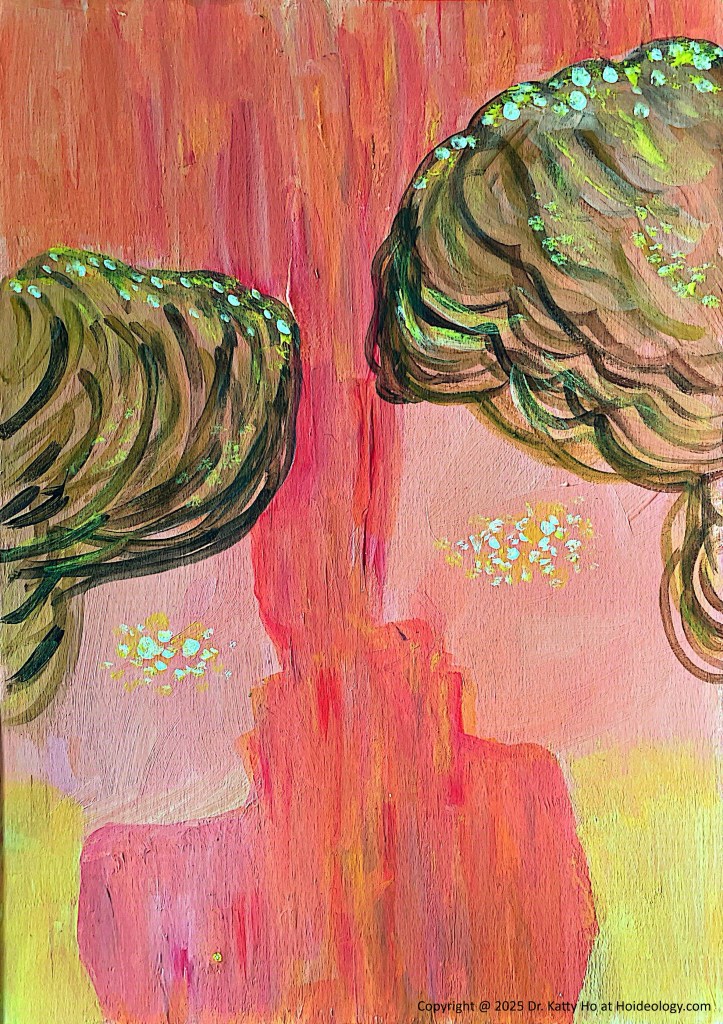
S1Ep4(Chu & Ho, 2025, September 18)是我們對題為 “父母風格的短期/長期影響” 的文獻綜述主題影片(Ho & Chu,2025 年,8 月 14 日)的評論。我們解決了有關 Garcia 和 Serra(2019)使用 “社會可接受的兒童行為” 一詞、什麼是 “發展性工具能力”、“最佳養育方式” 以及 闡釋 Dr. K. Ho 自己繪畫的 “父母溫暖” 和 “父母嚴格” 概念定義圖時的藝術選擇等問題。
S1Ep4 COMMENTARY: Short/Long-Term Effect of Parenting Styles 評論:父母教養風格的短/長期影響
September 18, 2025: COMMENTARY: What Is the Short-Term and Long-Term Effect of Parenting Style? | WhatIsAGoodMother_Project ARTICLE #2 IMPLICATIONS & APPLICATIONShttps://youtu.be/AtmwifqHl00
In this S1Ep4, we discuss:
(1) What are “socially acceptable/desirable ways” in which the child can act?
(2) What are involved in the child’s “developmental instrumental competence”?
(3) Which is the “best parenting style”?
(4) What artistic choices did you make when creating the illustrations of “parental warmth” and “parental strictness”?
在本 S1Ep4 中,我們探討:
(1) 哪些孩子的行為是 “被社會接納/期待”?
(2) 孩子的 “工具能力發展” 涉及哪方面?
(3) 哪一種 “教養子女風格最好”?
(4) 在創作 “父母溫暖” 和 “父母嚴格” 的插圖時,你做出了哪些藝術選擇?
***Co-Host, Author/Script-Writer/PowerPoint-Creator, Producer/Video-Editor, Executive Producer, Research Principal Investigator: Dr. Katty P. Ho, BA(Hons)Psy, MAPsy, MDiv, EdDEdPsy (https://hoideology.com/my-curriculum-…)
***Host, Undergraduate Research Apprentice: Genie Chu
(recorded on August 9, 2025; published on September 18, 2025)
Contents: COMMENTARY: Short/Long-Term Effect of Parenting Style 內容: 評論: 教養風格的結果
00:24 What are “socially acceptable/desirable ways” in which the child can act? 哪些孩子的行為是被社會接納/期待?
04:07 What are involved in the child’s “developmental instrumental competence”? 孩子的工具能力發展涉及哪方面?
08:50 Which is the “best parenting style”? 哪一種教養子女風格最好?
11:12 What artistic choices did you make when creating the illustrations of parental warmth and parental strictness? 在創作父母溫暖和父母嚴格的插圖時,做出了哪些藝術選擇?
References:
Garcia, O. F., & Serra, E. (2019). Raising children with poor school performance: Parenting styles and short-term and long-term consequences for adolescent and adult development. International Journal of Environmental Research and Public Health, 16(7), p. 1089, Article 1089. https://www.mdpi.com/1660-4601/16/7/1089
Copyright @ 2025 Dr. Katty Ho at Hoideology.com | To cite this material, use this: Chu, G., & Ho, K. P. (2025, September 18). COMMENTARY: Short/Long-term effect of parenting styles | WhatIsAGoodMother_Project Article #2 implications and applciations (Parenting Literature Review & Applications, Season 1, Episode 4). [YouTube video]. From Hoideology.com. https://youtu.be/AtmwifqHl00
COMMENTARY*: How Parenting Style Matters 評論*: 父母教養風格重要性
Note. * What is a COMMENTARY? Our WIAGM Channel COMMENTARY is spontaneous conversation based. In each, Undergraduate Research Apprentice Genie Chu raises 3 to 4 questions regarding the contents of a review episode/topic (see the title) and Research Principal Investigator Dr. K. Ho answers each question spontaneously and systematically based on her knowledge and interpretation of the cited research. In addition, Dr. Ho will include real-life illustrations of the cited concepts (e.g., published media) to clarify their meanings, as well as to link the cited research (the new) to related concepts in psychology (the old) to strengthen viewers’ understanding.
注釋. * 什麼是評論?我們 WIAGM 頻道的評論是用自發對話的形式。在每個評論影片中,本科生研究學徒 Genie Chu 就文獻綜述主題影片的內容提出 3 至 4 個問題(見標題),研究首席研究員 Dr. K. Ho 根據自己對引用研究的知識和解釋自發並系統地回答每個問題。此外,Dr. Ho 還會加入現實生活插圖(例如已發表的媒體)來闡明概念的含義,並且將所引用的研究(新)與心理學中的相關概念(舊)聯繫起來,以加強觀眾的理解。
S1Ep3 (Chu & Ho, 2025, September 4) discusses the significance of Parenting Style, addressing questions regarding the WhatIsAGoodMother_Project, the concept of Parental Reinforcement, and the common feelings that parents experience regarding their Parenting Practices. It highlights the disconnect often felt by parents about their effectiveness in parenting approaches.
S1Ep3 COMMENTARY: How Parenting Style Matters 評論:父母教養風格重要性
September 4, 2025: COMMENTARY: How Does Parenting Style Matter? | WhatIsAGoodMother_Project ARTICLE #1 IMPLICATIONS & APPLICATIONS https://youtu.be/T6NLlcOncy4
In this S1Ep3, we discuss:
(1) Why “what is a good MOTHER” project?
(2) What is Parental Reinforcement?
(3) Why do mothers (or parents) often feel that “they haven’t done the right Parenting Style or Parenting Practices”–that there is a disconnect?
在本 S1Ep3 中,我們探討:
(1) 為什麼要進行《什麼是好 *媽媽*_專案》?
(2) 什麼是 “父母強化”?
(3) 為什麼媽媽(或父母)常常覺得自己的 “教養風格” 或 “教養做法” 不正確-有脫節?
***Co-Host, Author/Script-Writer/PowerPoint-Creator, Producer/Video-Editor, Executive Producer, Research Principal Investigator: Dr. Katty P. Ho, BA(Hons)Psy, MAPsy, MDiv, EdDEdPsy (https://hoideology.com/my-curriculum-…)
***Host, Undergraduate Research Apprentice: Genie Chu
(recorded on August 9, 2025; published on September 4, 2025)
Contents: COMMENTARY: How Parenting Style Matters 內容: 評論: 父母教養風格重要性
08:04 What is “Parental Reinforcement”? 什麼是 “父母強化”?
14:03 Why do mothers (or parents) often feel that “they haven’t done the right parenting style or parenting practices”–that there is a disconnect? 為什麼媽媽(或父母)常常覺得自己的 “教養風格” 或 “教養做法” 不正確-有脫節?
Copyright @ 2025 Dr. Katty Ho at Hoideology.com | To cite this material, use this: Chu, G., & Ho, K. P. (2025, September 4). COMMENTARY: How does parenting style matter? | WhatIsAGoodMother_Project Article #1 implications and applications (Parenting Literature Review & Applications, Season 1, Episode 3). [YouTube video]. From Hoideology.com. https://youtu.be/T6NLlcOncy4
Short/Long-Term Effects of Parenting Style(+) 父母教養風格的短/長期影響(+)
Note. + This is a THEORETICAL (LITERATURE REVIEW) PRESENTATION video, whose script was written by Research Principal Investigator Dr. K. Ho and then recited by both Dr. K. Ho and Undergraduate Research Apprentice Genie Chu. In each, Dr. K. Ho studied and annotated rigorously the specific journal-theoretical article from our WIAGM Reading List selected for that particular season. Three articles (i.e., Darling & Steinberg, 1993; Garcia & Serra, 2019; and Rohner, 2021) have been chosen for Season 1.
注釋. + 這是一個理論性文獻綜述主題影片,其劇本由首席研究員 Dr. K. Ho 撰寫,然後由 Dr. K. Ho 和本科生研究學徒 Genie Chu 朗讀。在每個影片中,Dr. K. Ho 都嚴格研究並註釋了 WIAGM 閱讀清單中一個特定的期刊/理論文章。三篇文獻(即 Darling & Steinberg,1993 年;Garcia & Serra,2019 年;以及 Rohner,2021 年)被選入圍第一季的內容。
S1Ep2 (Ho & Chu, 2025, August 14) discusses the short-term and long-term effects of four parenting styles defined by Garcia and Serra (2019) – Authoritative, Authoritarian, Indulgent, and Neglectful. It highlights how Indulgent Parenting Style fosters better psychological well-being in adolescents and adults, while Neglectful Parenting Style has the most detrimental effects on the child’s mental-health outcomes.
Did you know? The best parenting style that may lead to the most optimal instrumental-developmental outcomes in your child is the Indulgent Parenting Style (Garcia & Serra, 2019). 你知道嗎? 能為你的子女帶來最佳工具性發展結果的養育方式就是溺愛型教養風格(Garcia & Serra,2019)。
Dr. Katty P. Ho (Mar 25, 2026)
If you were a child, what kind of Parenting Style (emotional attitude) would you like to see in your parents? Would you like him or her to be Warm or Cold, Strict or Autonomy Supportive? Your answer to my question will give you a clue to which Parenting Style contributes the best psychological outcomes in the child. Watch S1Ep2 to view the evidence. 如果您是個孩子,您希望在父母身上看到什麼樣的教養風格(情感態度)?您希望他或她溫暖還是冷漠、嚴格還是支持自主? 您對我的問題的回答將為您提供線索,了解哪種父母教養風格可以為子女帶來最佳的心理結果。 觀看 S1Ep2 去查看證據。
Dr. Katty P. Ho (Mar 25, 2026)
S1Ep2 Short/Long-Term Effect of Parental Style 父母教養風格的短/長期影響
August 14, 2025: “What Is the Short-Term and Long-Term Effect of Parenting Style?” | Presentation of WhatIsAGoodMother_Project Article #2, Garcia & Serra (2019), “Parenting Style and Adolescent and Adult Development”https://youtu.be/klO8JkKnlGY?si=-g1YeK0sRrItG8nP
In this S1Ep2, we present:
(1) Garcia & Serra’s (2019) definition of the 4 types of parenting styles, namely, authoritative, authoritarian, indulgent, and neglectful
(2) the short-term self-esteem, psycho-social maturity, and emotional maladjustment effects on adolescents and the long-term self-esteem, psycho-social maturity, and emotional maladjustment effects on adults that each of the 4 parenting styles causes
(3) how indulgent parenting led to the best psychological well-being in teenage and adult children, and how neglectful parenting led to the worst
***Co-Host, Author/Script-Writer/PowerPoint-Creator, Producer/Video-Editor, Executive Producer, Research Principal Investigator: Dr. Katty P. Ho, BA(Hons)Psy, MAPsy, MDiv, EdDEdPsy (https://hoideology.com/my-curriculum-…)
***Co-Host, Undergraduate Research Apprentice: Genie Chu
(recorded on July 25, 2025; published on August 14, 2025)
Contents: Short/Long-Term Effect of Parental Style 內容: 父母教養風格的短/長期影響
22:05 –Indulgent Parenting (High in Warmth But Low in Strictness) and the Best Instrumental Competences in All Age Groups 溺愛型教養風格(高度溫暖但低度嚴格)與各年齡層最佳工具性能力
22:56 –Authoritaritan and Neglectful Parenting (Parental Coldness) and the Worst Outcomes 專制型和忽視型教養風格及其最壞後果
Garcia, O. F., & Serra, E. (2019). Raising children with poor school performance: Parenting styles and short-term and long-term consequences for adolescent and adult development. International Journal of Environmental Research and Public Health, 16(7), p. 1089, Article 1089. https://www.mdpi.com/1660-4601/16/7/1089
Copyright @ 2025 Dr. Katty Ho at Hoideology.com | To cite this material, use this: Ho, K. P., & Chu, G. (2025, August 14). What is the short-term and long-term effect of parenting style? Presentation of WhatIsAGoodMother_Project Article #2, Garcia & Serra (2019): “Parenting style and adolescent and adult development” (Parenting Literature Review & Applications, Season 1, Episode 2). [YouTube Video]. From Hoideology.com. https://youtu.be/klO8JkKnlGY
Note. + This is a THEORETICAL (LITERATURE REVIEW) PRESENTATION video, whose script was written by Research Principal Investigator Dr. K. Ho and then recited by both Dr. K. Ho and Undergraduate Research Apprentice Genie Chu. In each, Dr. K. Ho studied and annotated rigorously the specific journal-theoretical article from our WIAGM Reading List selected for that particular season. Three articles (i.e., Darling & Steinberg, 1993; Garcia & Serra, 2019; and Rohner, 2021) have been chosen for Season 1.
注釋. + 這是一個理論性文獻綜述主題影片,其劇本由首席研究員 Dr. K. Ho 撰寫,然後由 Dr. K. Ho 和本科生研究學徒 Genie Chu 朗讀。在每個影片中,Dr. K. Ho 都嚴格研究並註釋了 WIAGM 閱讀清單中一個特定的期刊/理論文章。三篇文獻(即 Darling & Steinberg,1993 年;Garcia & Serra,2019 年;以及 Rohner,2021 年)被選入圍第一季的內容。
S1Ep1 (Ho & Chu, 2025, August 5) discusses Darling and Steinberg’s (1993) model, highlighting the crucial role of Parenting Style as context influencing the relationship between Parenting Practices and child outcomes. It delineates how Parenting Style (i.e., the parent’s emotional attitude) impacts a child’s personality and psychological well-being, underscoring its significance in shaping development.
Your “Parenting Style” (i.e., your emotional attitude) affects your child’s personality (Darling & Steinberg, 1993). How? Two-Way Communication (the Authoritative style) breeds “openness in the child” to adapt to any Parental Practices bestowed to him or her. In contrast, One-Way Communication (the Authoritarian style, such as Coercion) that devalues eye-level, equal communication, breeds “unwillingness in the child” to adapt to the Parental Practices demanded. Watch S1Ep1 to view the details and theoretical model. 你的「教養風格」(即你的情緒態度)會影響你孩子的個性(Darling & Steinberg,1993)。如何?雙向溝通(權威型)會培養「孩子開放的態度」,去適應父母賦予他或她的任何做法。相較之下,單向溝通(獨裁風格,如強制)貶低了平視、平等溝通,會導致「孩子不願意」適應父母的做法。 觀看 S1Ep1 去查看詳細資訊和理論模型。
Dr. Katty P. Ho (Mar 25, 2026)
People often mistake “Parenting Practices” as the sole method of parenting. They ignore their “emotional attitude” (i.e., Parenting Style) that they use toward the child. Thus, they misuse Warmth (acceptance, affection, praises, etc.) and Coldness (withdrawal of acceptance, affection, praises, etc.) for the goal of manipulating the child’s emotions and behaviors (see S1Ep5). Unhealthy parents even deliberately use Coldness to hurt their child’s feelings and stifle his or her emotional competence (as well as intelligences). 人們常誤以為「父母教養做法」是唯一的養育方法。他們忽略了對子女的「情感態度」(即教養風格)。因此,他們濫用溫暖(接受、喜愛、讚美等)和冷漠(撤回接受、喜愛、讚美等)來達到操縱子女的情緒和行為的目的(請參閱 S1Ep5)。 不健康的父母還會故意用冷漠來傷害孩子的感情並扼殺他或她的情緒能力(以及智力)。
Dr. Katty P. Ho (Mar 25, 2026)
S1Ep1 How Parenting Style Matters 父母教養風格重要性
August 5, 2025: “How Does Parenting Style Matter?” | Presentation of WhatIsAGoodMother_Project Article #1, Darling & Steinberg (1993), “Parenting Style as Context: An Integrative Model”https://youtu.be/q1edJmE7Kqc
In this S1Ep1, we present:
(1) Darling and Steinberg’s (1993) seminal conceptual model illuminating parenting style as context to parenting practices-child outcomes correlation
(2) differences between the effect of parenting style and the effect of parenting practices on child’s personality and developmental outcomes
(3) why parenting style is the determining factor toward shaping the child’s personality and psychological well-being
***Co-Host, Author/Script-Writer/PowerPoint-Creator, Producer/Video-Editor, Executive Producer, Research Principal Investigator: Dr. Katty P. Ho, BA(Hons)Psy, MAPsy, MDiv, EdDEdPsy (https://hoideology.com/my-curriculum-…)
***Co-Host, Undergraduate Research Apprentice: Genie Chu
(recorded on May 9, 2025; published on August 5, 2025)
Copyright @ 2025 Dr. Katty Ho at Hoideology.com | To cite this material, use this: Ho, K. P., & Chu, G. (2025, August 5). How does parenting style matter? Presentation of WhatIsAGoodMother_Project Article #1, Darling & Steinberg (1993): “Parenting style as context: an integrative model” (Parenting Literature Review & Applications, Season 1, Episode 1). [YouTube Video]. From Hoideology.com. https://youtu.be/q1edJmE7Kqc
Disclaimer: Confidentiality is strictly administered. All information and psychoeducational materials published by Hoideology.com is based on existing published cases that are viewable and accessible by the general public (e.g., books, websites, videos) and on scientific research (e.g., journal articles) by the academic communities. No individuals’ data are or will be used and mentioned. Because of the seriousness of the topic of parenting, we choose to adopt a friendly tone in our speech style to render a lighthearted ambience to our presentations and commentaries. Our smiles and cheers (at the beginning and/or end of our videos) reflect our encouragement to each other–and do not reflect our lack of empathy.