
WhatIsAGoodMother_Project Channel, Season 2
《什麼是好媽媽_研究》頻道, 第二季
Published on
Modified on

Introducing the WhatIsAGoodMother_Project Channel (WIAGM Channel), Season 2 — by Dr. K. Ho
Hi! This is Dr. Katty (“Katy”) Ho. I earned my Ed.D. in Educational Psychology from The Chinese University of Hong Kong, my M.Div. from Gordon-Conwell Theological Seminary, my M.A. in Psychology from Boston University, and my B.A. cum laude (Hons) in Psychology from The University of California at Berkeley. I have been in the field of psychology in the past 30 years with 13 years of experience working as Lecturer of Psychology to undergraduates and post-graduates in Hong Kong (at EdUHK, CUHK, and CityUHK) and 10 years of extensive research and project experiences in the USA and HK (CLAP@JC-Schools, EdUHK, CUHK, CityUHK, Vision New England, Gordon-Conwell Theological Seminary, McBer & Company/The HayGroup, UC Berkeley, etc.). My WhatIsAGoodMother_Project Channel aims to provide psychoeducation on Parenting Research to clients, students, professionals, and general readers and viewers anywhere in the world.
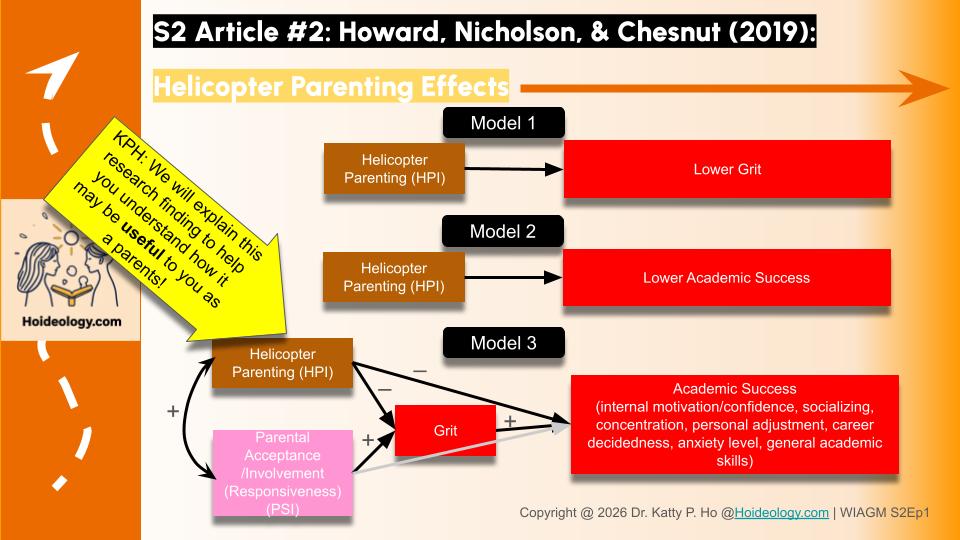
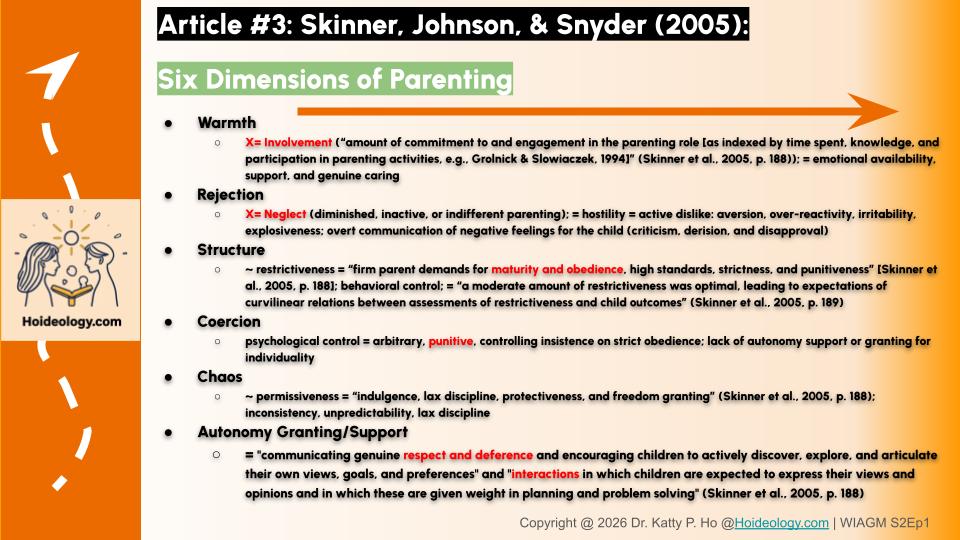
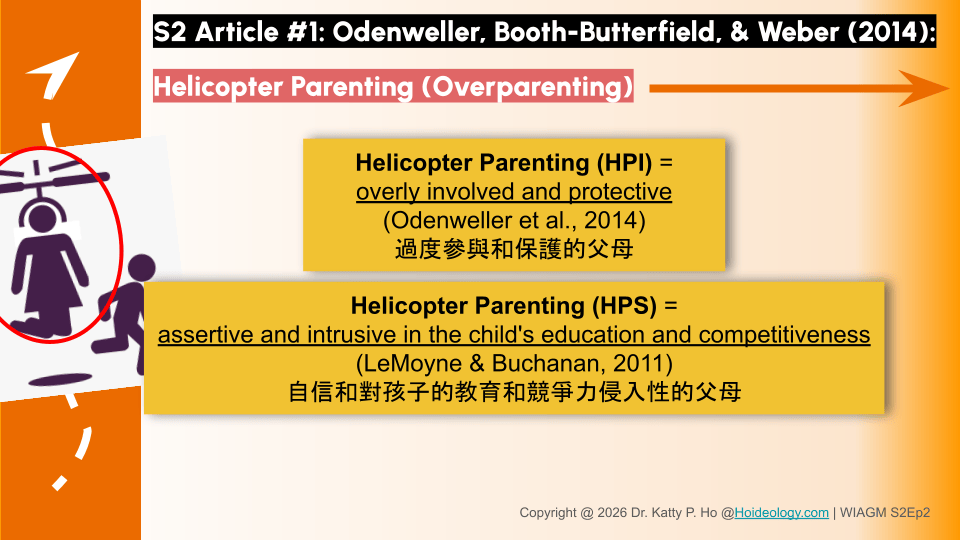
In WIAGM Channel Season 2, I investigated three concepts: (a) Helicopter Parenting (i.e., overparenting), (b) the Helicopter Parenting Effects, and (c) the Six Parenting Dimensions (i.e., warmth, rejection, structure, chaos, autonomy support, and coercion), using three journal articles, which are Odenweller, Booth-Butterfield, & Weber (2014) on defining Helicopter Parenting, Howard, Nicholson, & Chesnut (2019) on investigating the Helicopter Parenting Effects, and Skinner, Johnson, & Snyder (2005) on understanding the differentiation between the Six Dimensions of Parenting. Between now and the publication dates of the videos, when I have time, I will write more about what I am finding in my research process on these concepts and their operational definitions, that is, how they are different from or similar to each other, and more important, what those concepts mean to us as parents and why we need to know — and, What difference does it make?
Stay tuned to my updates and our new episodes in Season 2! We will keep you posted from time to time!
Dr. K. Ho (May 21, 2026, Hong Kong)
Season 2’s 8 episodes are as follows:
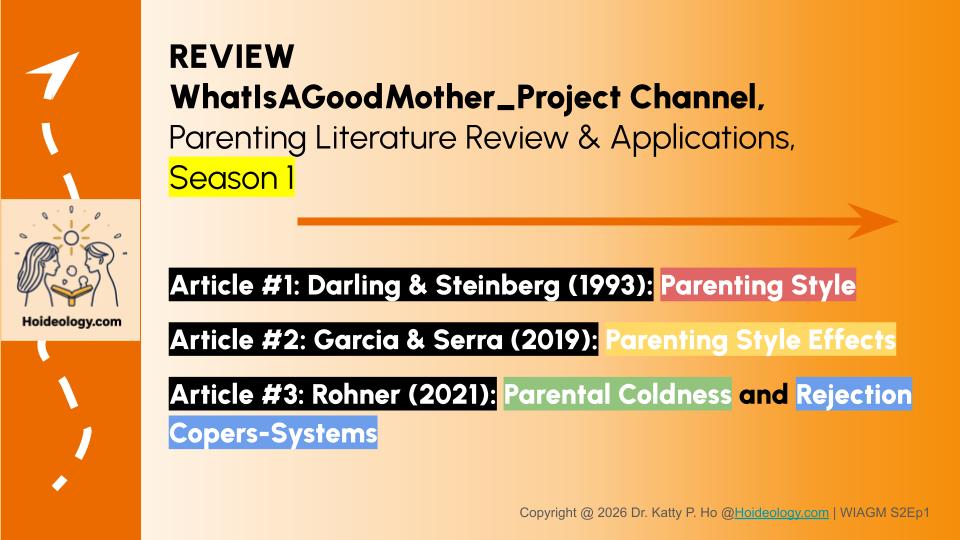
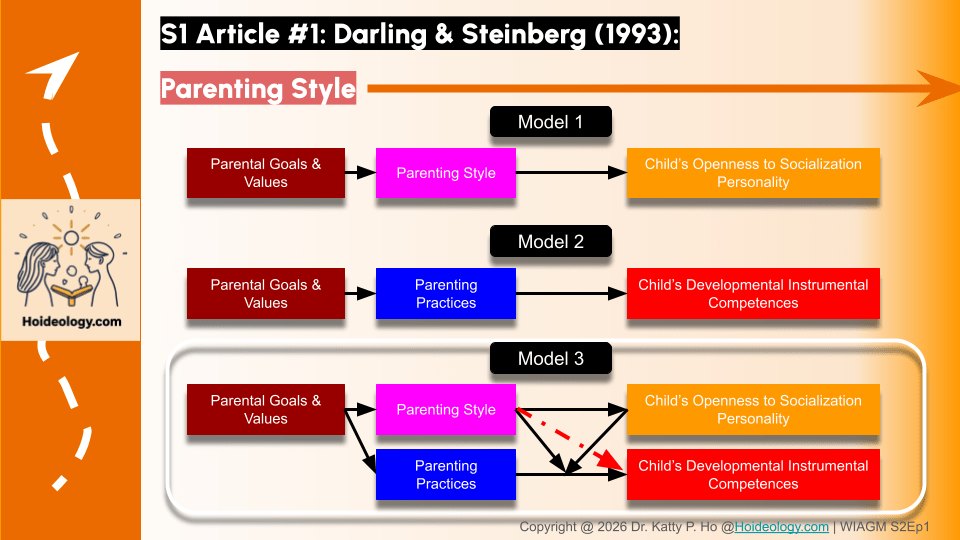
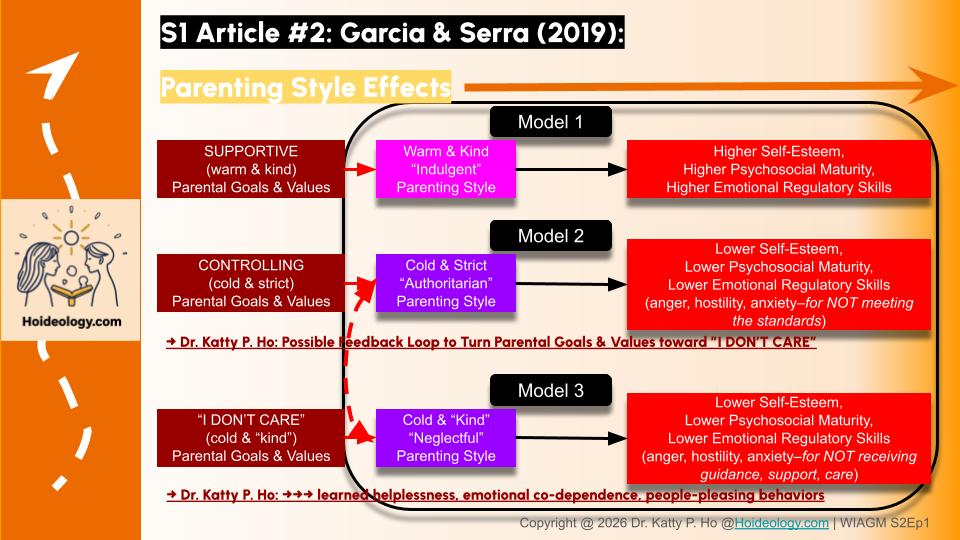
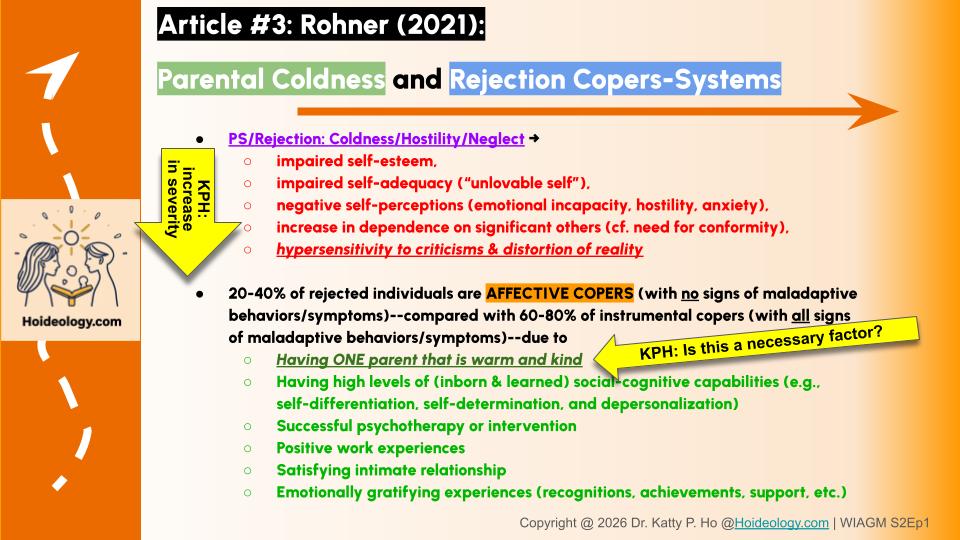
S2Ep1 Season 2 Episode 1 (July 30, 2026): Introduction to Season 2! (watch) (Contents: (a) Reviewing Season 1 [Parenting Style/Parenting Style Effects/Parental Coldness Effects/Rejection Copers-Systems]; (b) Introducing Season 2 [Helicopter Parenting/Helicopter Parenting Effects/Six Parenting Dimensions]; (c) Misconceptions about Positive Parenting and Helicopter Parenting and Their Benefits and Drawbacks)
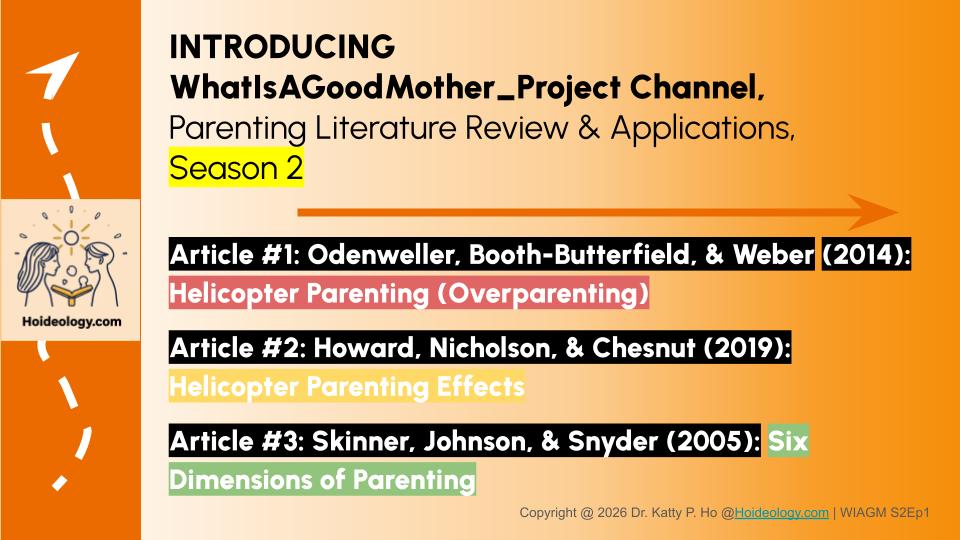
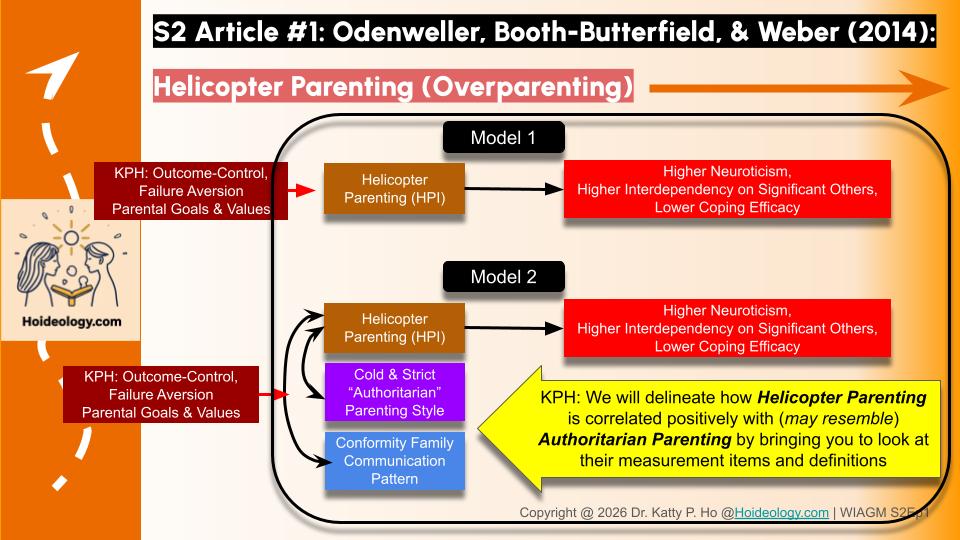
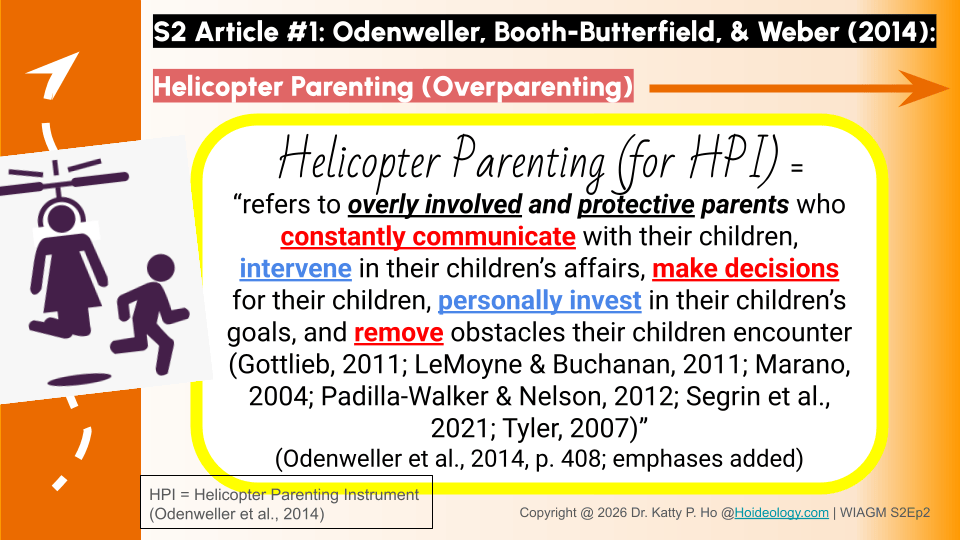
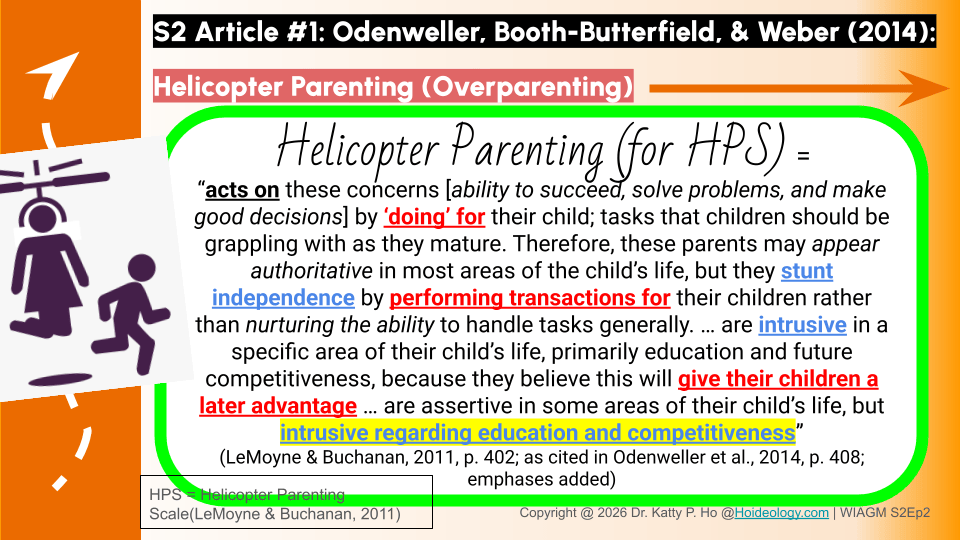
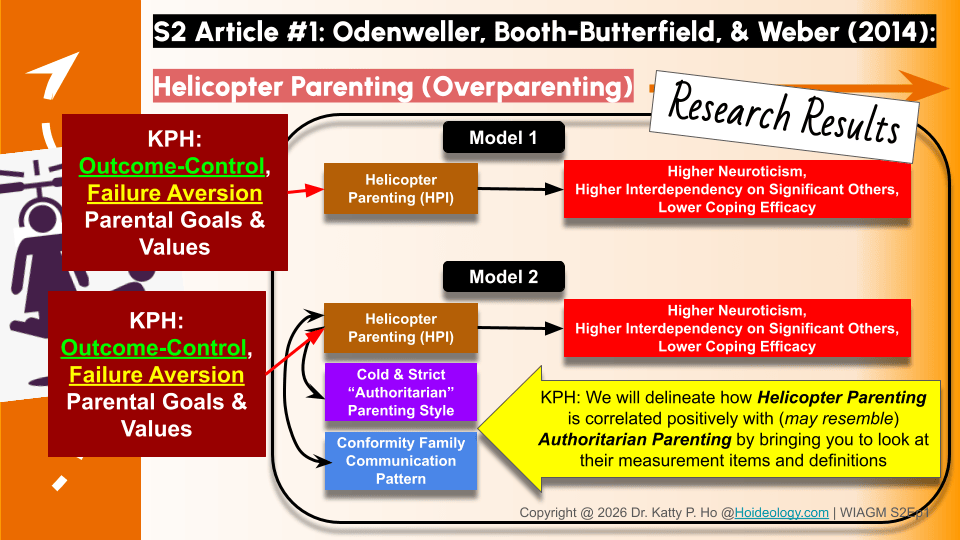
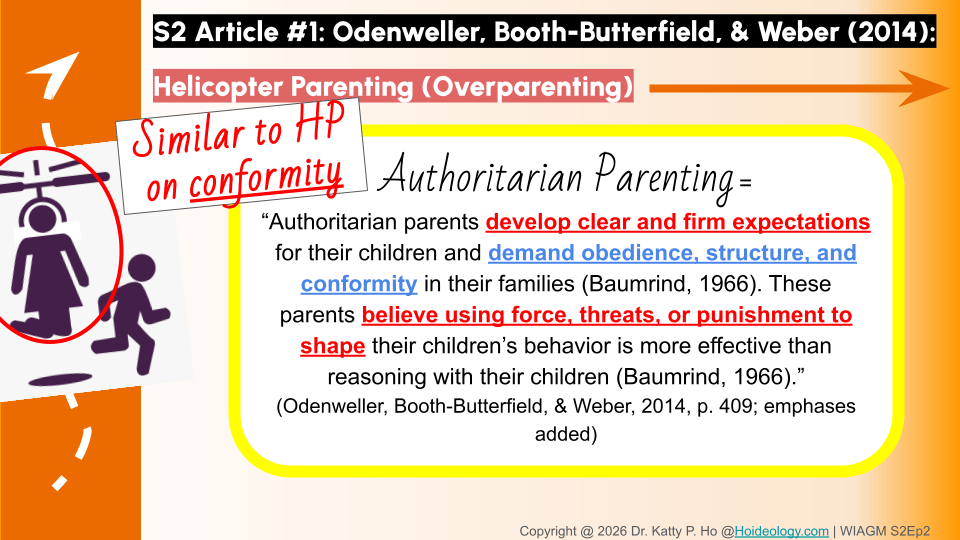
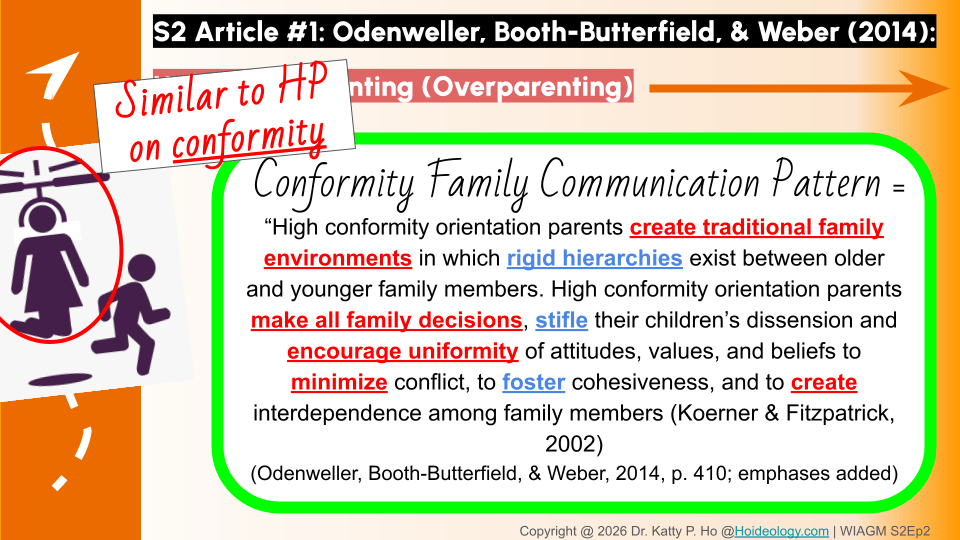
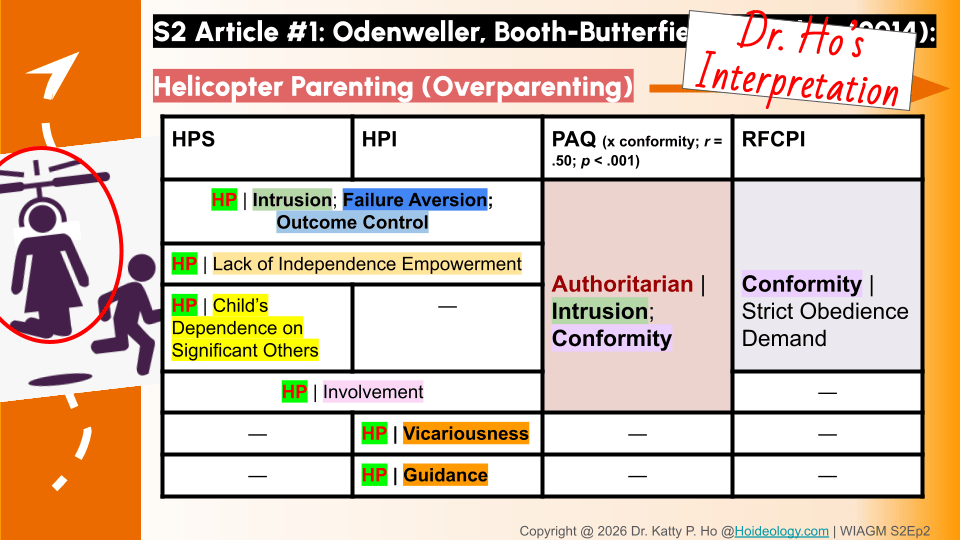
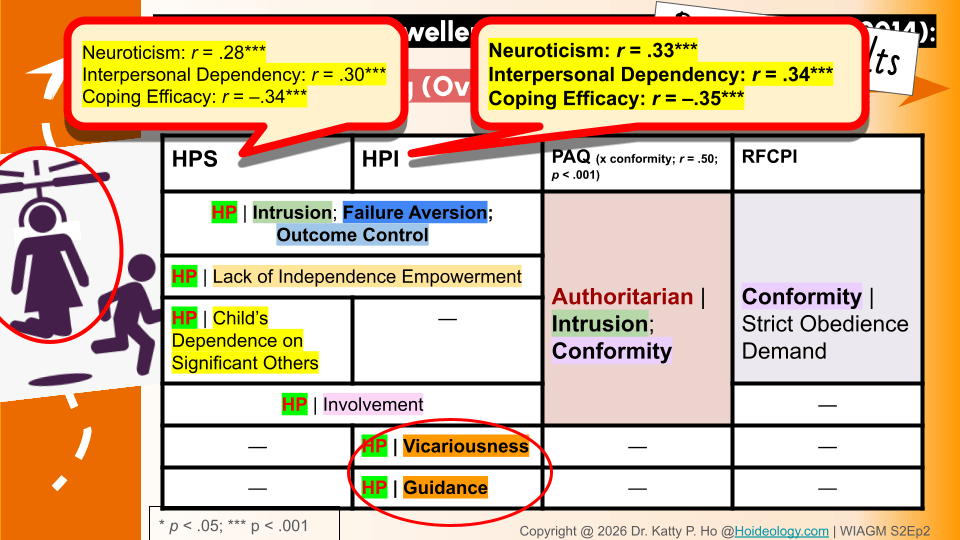
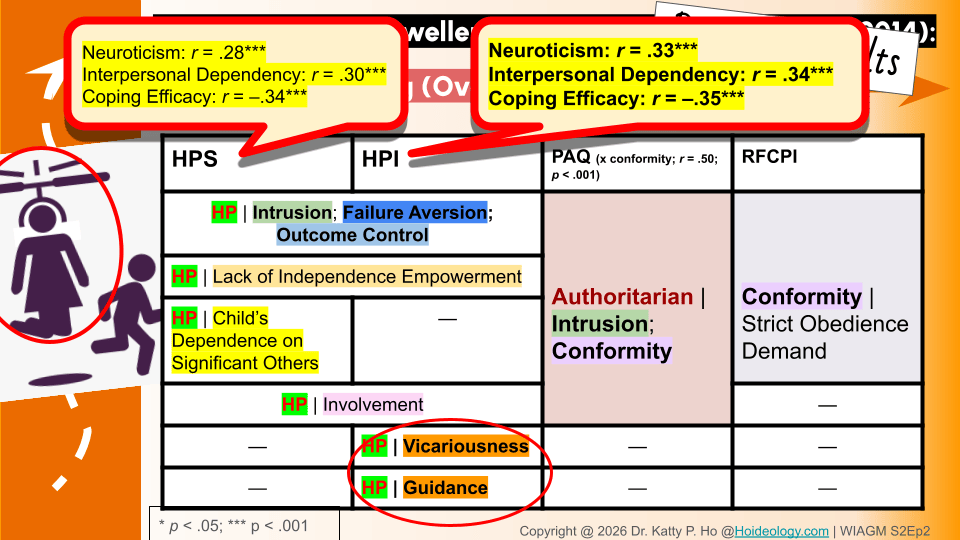
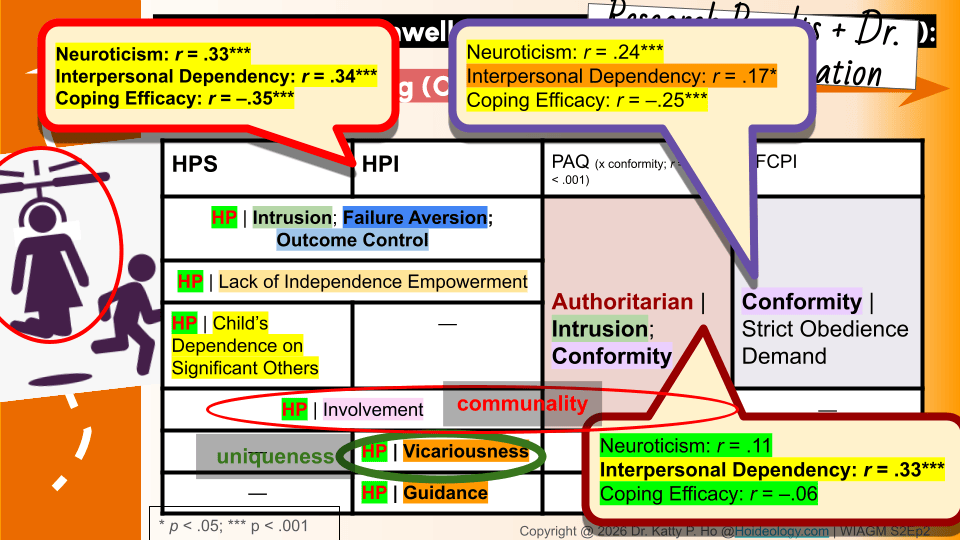
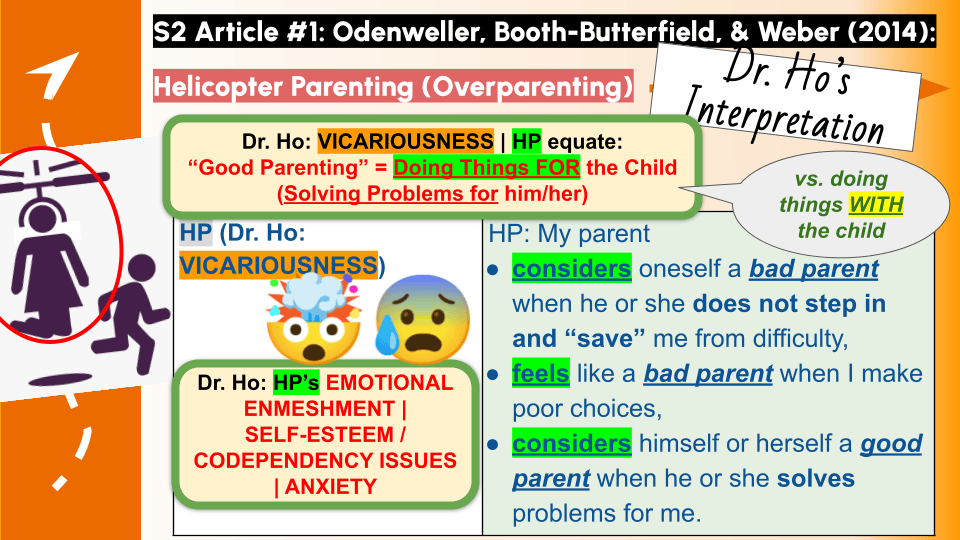
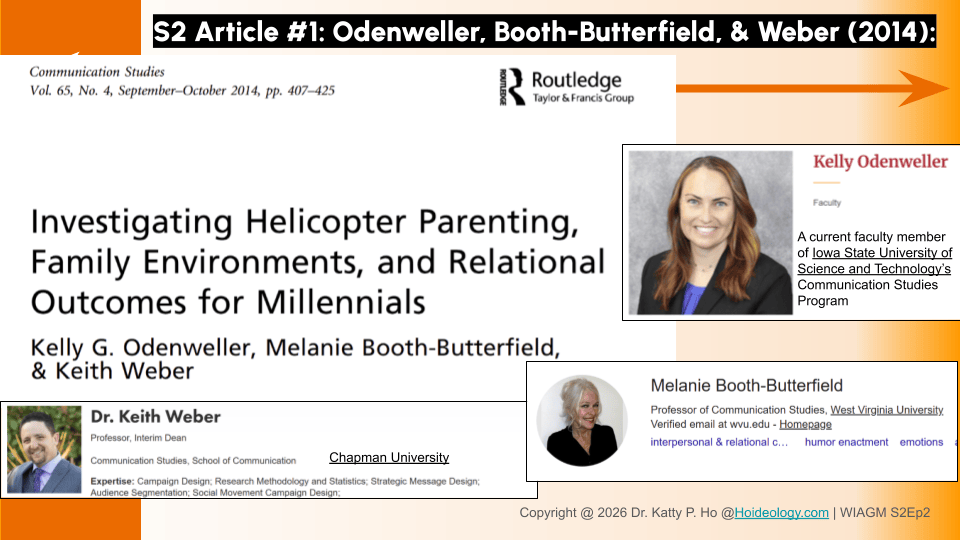
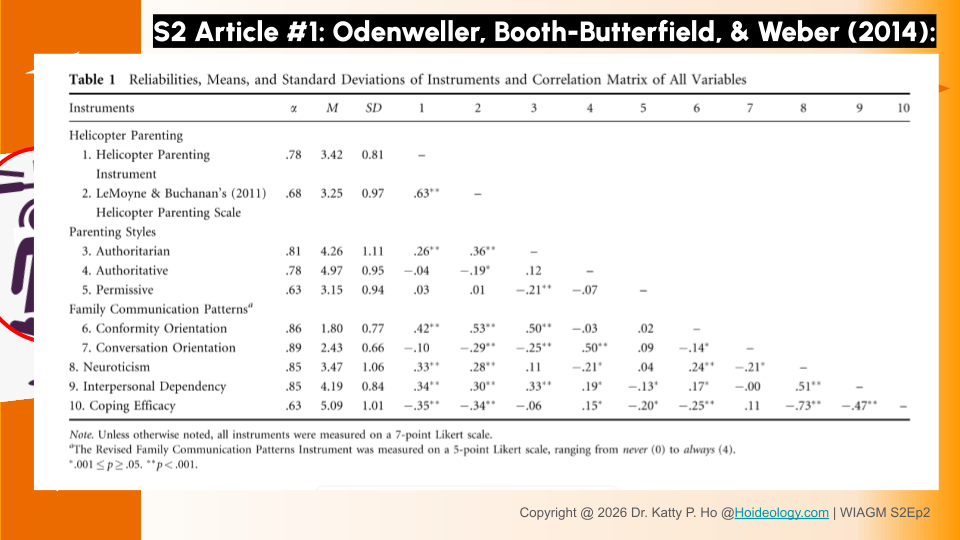
S2Ep2 Season 2 Episode 2 (expected in October 2026): What is Helicopter Parenting and Why it leads to negative child outcomes (Odenweller, Booth-Butterfield, & Weber, 2014)
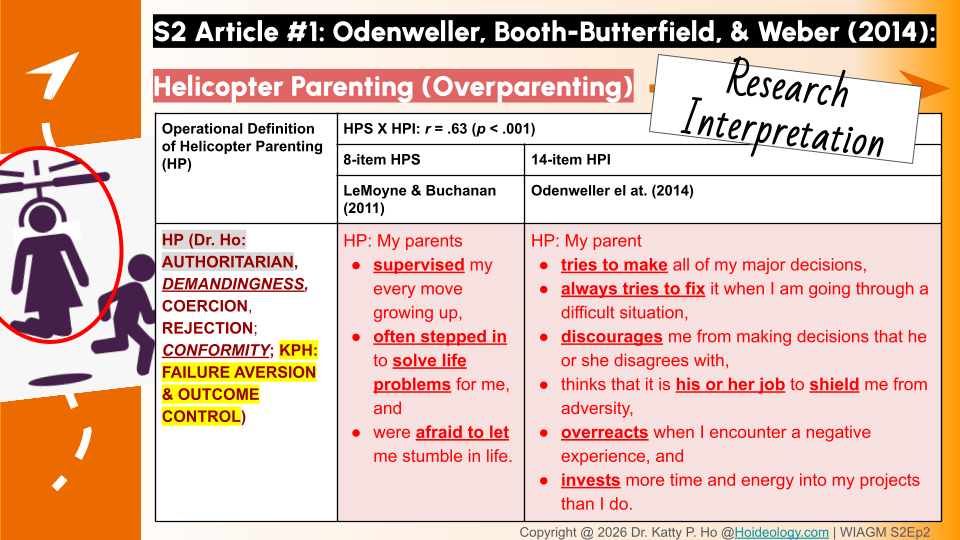
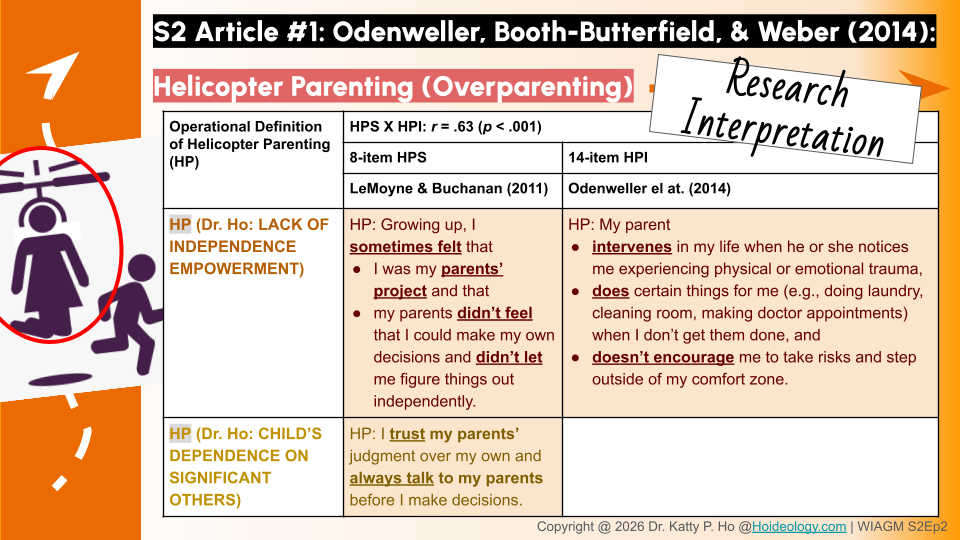
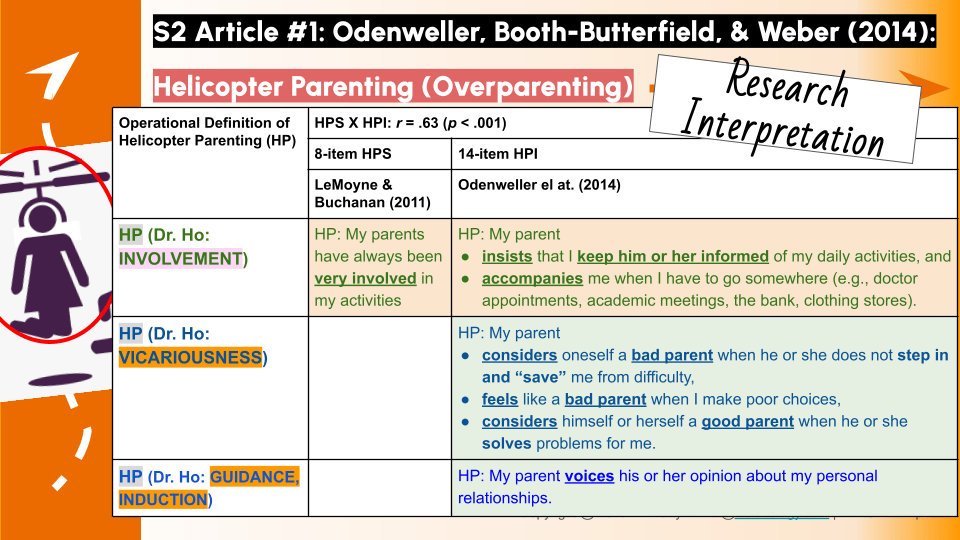
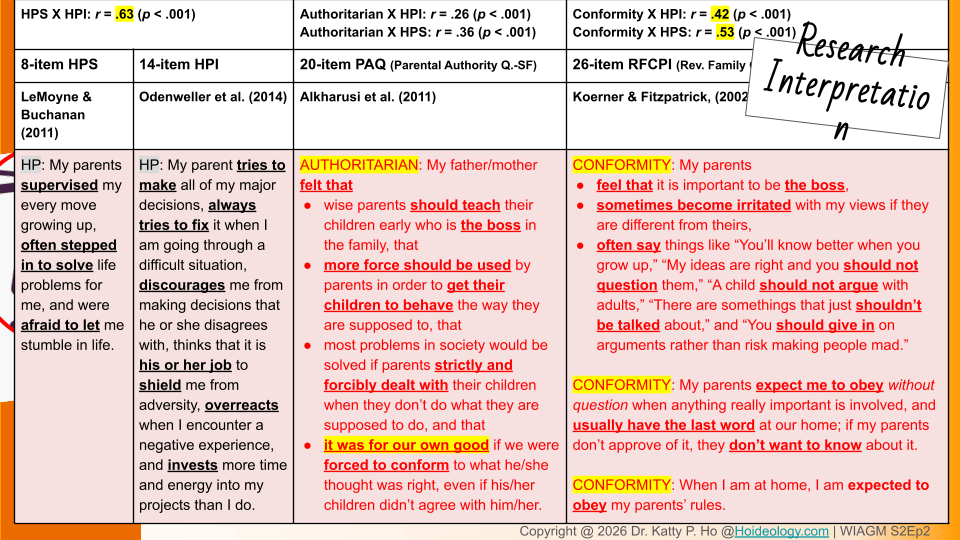
S2Ep3 Season 2 Episode 3 (expected in November 2026): COMMENTARY: What is Helicopter Parenting and its negative child outcomes: Implications & applications
Episode 4 (expected in January 2027): What are Helicopter Parenting Effects on grit and academic success (Howard, Nicholson, & Chesnut, 2019)
Episode 5 (expected in March 2027): COMMENTARY: What are Helicopter Parenting Effects: Implications & applications
Episode 6 (expected in May 2027): What are the Six Dimensions of Parenting and How we should understand them (Skinner, Johnson, & Snyder, 2005)
Episode 7 (expected in June 2027): COMMENTARY: What are the Six Dimensions of Parenting: Implications & applications
Episode 8 (expected in July 2027): Insights from Season 2!!
Season 2, Reading List (June 2026-April 2027):
第二季閱讀清單:
| Article #1. Odenweller, K. G., Booth-Butterfield, M., & Weber, K. (2014). Investigating helicopter parenting, family environments, and relational outcomes for millennials. Communication Studies, 65(4), 407-425. http://dx.doi.org/10.1080/10510974.2013.811434 Article #2. Howard, J. M., Nicholson, B. C., & Chesnut, S. R. (2019). Relationships between positive parenting, overparenting, grit, and academic success. Journal of College Student Development, 60(s), March-April, pp. 189-202. https://doi.org/10.1353/csd.2019.0018 Article #3. Skinner, E., Johnson, S., & Snyder, T. (2005). Six dimensions of parenting: A motivational model. Parenting: Science and Practice, 5(2), April-June, 175-235. https://doi.org/10.1207/s15327922par0502_3 |
Disclaimer: Confidentiality is strictly honored and administered. All information and psychoeducational materials published by Hoideology.com on this website or YouTube Channel is based on existing cases that have been already published elsewhere in the scientific communities (e.g., journal articles), books, news, or other websites and YouTube channels, with citation of references in the APA (American Psychological Association) format. No individual clients’ cases, data, or information are or will be used, mentioned, or cited here or elsewhere.
聲明:我們嚴格遵守和執行保密原則。 在本網站或其頻道所談論和引用的所有資訊、案例和心理教育資料均已經在科學界的平台(例如期刊文章)、書籍、新聞或其他網站和 YouTube 頻道被發表過,並有 APA(美國心理學會)格式引用參考文獻。我們絕不會談論和引用任何個別/個人客戶的案例、資料或資訊在本網站的媒體或其他地方。
WIAGM_S1Ep8 COMMENTARY: Copers-Systems of Parental Rejection
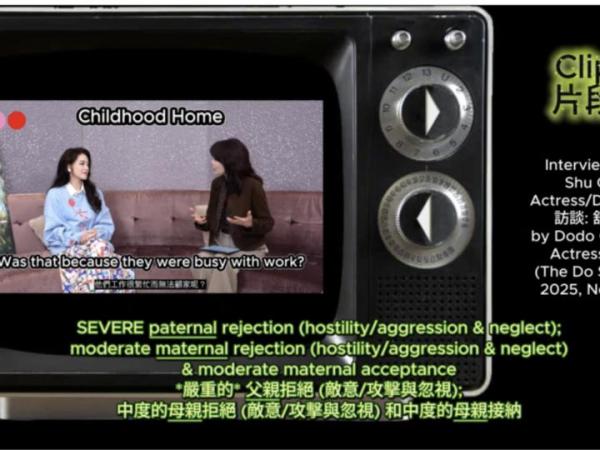
In Season 1, Episode 8 (Chu & Ho, 2026, April 14) of the WIAGM Channel, the discussion focuses on the coping mechanisms related to parental rejection. Illustrations from Shu Qi’s case were used. Key topics include distinguishing between Affective Copers and Instrumental Copers, understanding the impact of Parental Rejection on behavior through Cognitive-Behavioral Therapy, the…

WIAGM_S1Ep7 COMMENTARY: The Problem of Parental Coldness
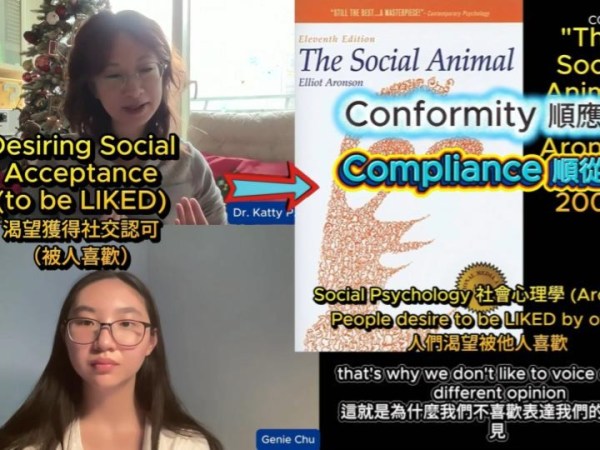
S1Ep7 (Chu & Ho, 2026, February 23) is a commentary on Ho & Chu’s (S1Ep5; 2025, November 3) video presentation entitled “The Problem of Parental Coldness.” Specifically, we address the significance of non-parental figures in child development, explains in details the concept and definition of Defensive Independence that is associated with severe Parental Rejection experienced…
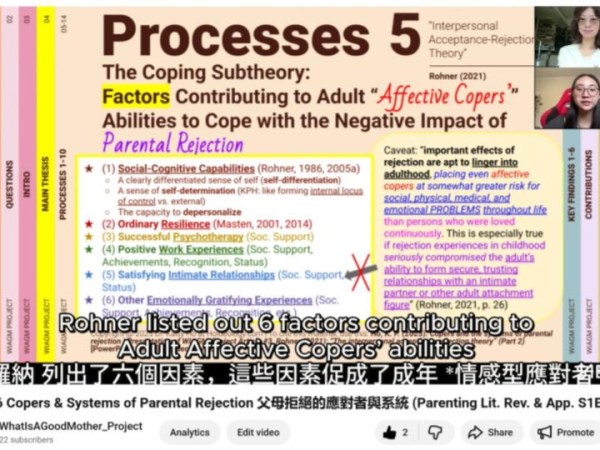
WIAGM_S1Ep6 Copers & the Systems of Parental Rejection
S1Ep6 (Ho & Chu, 2025, December 16) entitled “Copers and the Systems of Parental Rejection” examines Rohner’s (2021) coping subtheory that defines Affective Copers (20-40% of rejected individuals) and Instrumental Copers (60-80% of rejected individuals). We also explain in details Rohner’s description of the social-cognitive capabilities (namely, self-differentiation, self-determination, and de-personalization) that Affective Copers possess,…

