
WhatIsAGoodMother_Project Channel, Season 1
《什麼是好媽媽_研究》頻道, 第一季
Published on
Modified on

Introducing The WhatIsAGoodMother_Project Channel (WIAGM Channel), Season 1 — by Dr. K. Ho
Hi! This is Dr. Katty (“Katy”) Ho. I earned my Ed.D. in Educational Psychology from The Chinese University of Hong Kong, my M.Div. from Gordon-Conwell Theological Seminary, my M.A. in Psychology from Boston University, and my B.A. cum laude (Hons) in Psychology from The University of California at Berkeley. I have been in the field of psychology in the past 30 years with 13 years of experience working as Lecturer of Psychology to undergraduates and post-graduates in Hong Kong (at EdUHK, CUHK, and CityUHK) and 10 years of extensive research and project experiences in the USA and HK (CLAP@JC-Schools, EdUHK, CUHK, CityUHK, Vision New England, Gordon-Conwell Theological Seminary, McBer & Company/The HayGroup, UC Berkeley, etc.). My WhatIsAGoodMother_Project Channel aims to provide psychoeducation on Parenting Research to clients, students, professionals, and general readers and viewers anywhere in the world.
Parenting Style (emotional attitude) is the building block to one’s psychological well-being and one’s development of mental-personality-interpersonal-marital-health problems and disorders. Better knowledge and understanding of the critical parent-child processes can help you learn how to prevent the development of those problems in your family, as well as enhance functioning in the family.
In Season 1, we have made two types of videos to achieve these goals: Theoretical (Literature Review) PRESENTATIONS and COMMENTARIES.
What is included in our Theoretical (Literature Review) PRESENTATION? In our WIAGM Channel’s Season 1 (2025/26), I authored and created the scripts and PowerPoint slides, as well as edited all the videos and subtitles (Ho & Chu, 2025, August 5; 2025, August 14; 2025, November 3; 2025, December 16). My scripts and PowerPoint slides provide background information of the research literature (theory), method, and findings of the original authors’ work that we reviewed. Then, I invited Genie Chu, my Undergraduate Research Apprentice, who is a Psychology and Philosophy student at the University of Sydney, to recite the scripts and presented the materials with me. She is my faithful collaborator!
The three theoretical/empirical studies that we reviewed in Season 1 were Darling & Steinberg (1993) on the definition of Parenting Style as Context (Parenting Style), Garcia & Serra (2019) on the short/long-term effects of Parenting Style on adolescent and adult child’s psychosocial-emotional outcomes (Parenting Style Effects) , and Rohner (2021) on his comprehensive Interpersonal Acceptance-Rejection Theory that comes with the Personality Subtheory (Parental Coldness Effects), Coping Subtheory, and Sociocultural Systems and Model Subtheory (Rejection Copers-Systems).
What is a COMMENTARY? Our WIAGM Channel COMMENTARIES were spontaneous conversations/discussions between me and Genie on the specific topics under scrutiny. In each of those COMMENTARY episodes, Genie raised some thoughtful questions and I responded to the questions using the theories and research that we reviewed in our previous episode(s). I also added more illustrations and/or clips to enrich our contents and enhance viewers’ understanding of the life applications. Season 1’s four COMMENTARIES were Episode 3 on “Parenting Style,” Episode 4 on “Parenting Style Effects,” Episode 7 on “Parental Coldness Effects,” and “Rejection Copers-Systems.” To honor Genie’s leadership, I placed her as first author of Season 1’s COMMENTARIES.
I hope that you will enjoy learning with us through these videos, each had been crafted with care by myself using traditional human annotation method with my own brain and hands (no A.I. tools or ChatGPT have been used–in fact, I don’t have ChatGPT on my computer), zoom recording, traditional PowerPoint slides making, and the CapCut video-editing software. I hope you will appreciate our joy in presenting and discussing these serious topics, in order that you will also learn about these critical theories/research and apply them in your life!
Please leave us your constructive comments on our videos! We’ll appreciate your feedback greatly!
Dr. K. Ho (April 22, 2026, Hong Kong)
Season 1, offers 8 Episodes (August 2025-April 2026):
第 1 季共 8 集:
Please click onto the links below to view the details of each episode.
Episode 1 (Aug 5, 2025): How Parenting Style Matters 父母教養風格重要性 (Darling & Steinberg, 1993) Learn more …
Episode 2 (Aug 14, 2025): Short/Long-Term Effect of Parenting Style 父母教養風格的短/長期影響 (Garcia & Serra, 2019) Learn more …
Episode 3 (Sep 4, 2025): COMMENTARY: How Parenting Style Matters 評論: 父母教養風格重要性 (S1Ep1; Ho & Chu, 2025, August 5) Learn more …
Episode 4 (Sep 18, 2025): COMMENTARY: Short/Long-Term Effect of Parenting Style 評論: 父母教養風格的結果 (S1Ep2; Ho & Chu, 2025, August 14) Learn more …
Episode 5 (Nov 3, 2025): The Problem of Parental Coldness 父母冷漠的問題 (Rohner, 2021; part 1) Learn more …
Episode 6 (Dec 16, 2025): Copers and the Systems of Parental Rejection 父母拒絕的應對者與系統 (Rohner, 2021; part 2) Learn more …
Episode 7 (Feb 23, 2026): COMMENTARY: The Problem of Parental Coldness 評論: 父母冷漠的問題 (S1Ep5; Ho & Chu, 2025, November 3) Learn more …
Episode 8 (Apr 14, 2026): COMMENTARY: Copers and the Systems of Parental Rejection 評論: 父母拒絕的應對者與系統 (S1Ep6; Ho & Chu, 2025, December 16) Learn more …
Season 1, Reading List (August 2025-April 2026):
第一季閱讀清單:
| Article #1. Darling, N., & Steinberg, L. (1993). Parenting style as context: An integrative model. Psychological Bulletin, 113, 487–496. https://doi.org/10.1037/0033-2909.113.3.487 Article #2. Garcia, O. F., & Serra, E. (2019). Raising children with poor school performance: Parenting styles and short-term and long-term consequences for adolescent and adult development. International Journal of Environmental Research and Public Health, 16(7), p. 1089, Article 1089. https://www.mdpi.com/1660-4601/16/7/1089 Article #3. Rohner, R. P. (2021). Introduction to interpersonal acceptance-rejection theory (IPARTheory) and evidence. Online Readings in Psychology and Culture, 6(1). https://doi.org/10.9707/2307-0919.1055 |
Disclaimer: Confidentiality is strictly honored and administered. All information and psychoeducational materials published by Hoideology.com on this website or YouTube Channel is based on existing cases that have been already published elsewhere in the scientific communities (e.g., journal articles), books, news, or other websites and YouTube channels, with citation of references in the APA (American Psychological Association) format. No individual clients’ cases, data, or information are or will be used, mentioned, or cited here or elsewhere.
聲明:我們嚴格遵守和執行保密原則。 在本網站或其頻道所談論和引用的所有資訊、案例和心理教育資料均已經在科學界的平台(例如期刊文章)、書籍、新聞或其他網站和 YouTube 頻道被發表過,並有 APA(美國心理學會)格式引用參考文獻。我們絕不會談論和引用任何個別/個人客戶的案例、資料或資訊在本網站的媒體或其他地方。
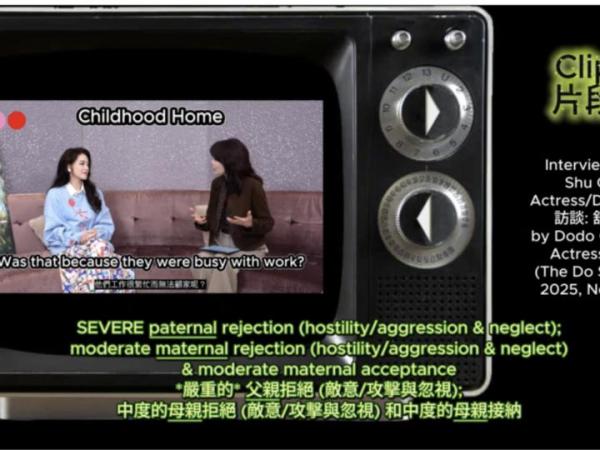
WIAGM_S1Ep8 COMMENTARY: Copers-Systems of Parental Rejection
In Season 1, Episode 8 (Chu & Ho, 2026, April 14) of the WIAGM Channel, the discussion focuses on the coping mechanisms related to parental rejection. Illustrations from Shu Qi’s case were used. Key topics include distinguishing between Affective Copers and Instrumental Copers, understanding the impact of Parental Rejection on behavior through Cognitive-Behavioral Therapy, the…

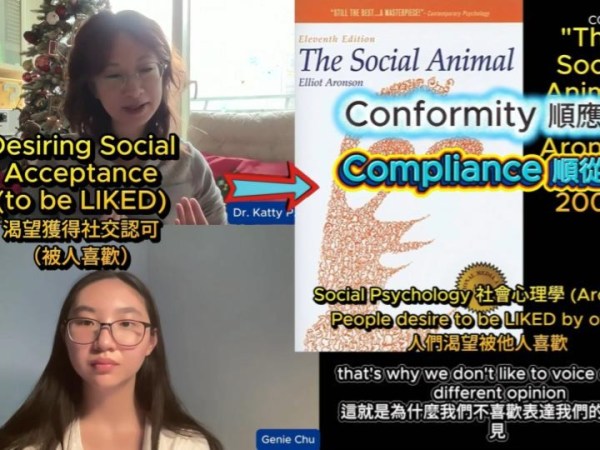
WIAGM_S1Ep7 COMMENTARY: The Problem of Parental Coldness
S1Ep7 (Chu & Ho, 2026, February 23) is a commentary on Ho & Chu’s (S1Ep5; 2025, November 3) video presentation entitled “The Problem of Parental Coldness.” Specifically, we address the significance of non-parental figures in child development, explains in details the concept and definition of Defensive Independence that is associated with severe Parental Rejection experienced…
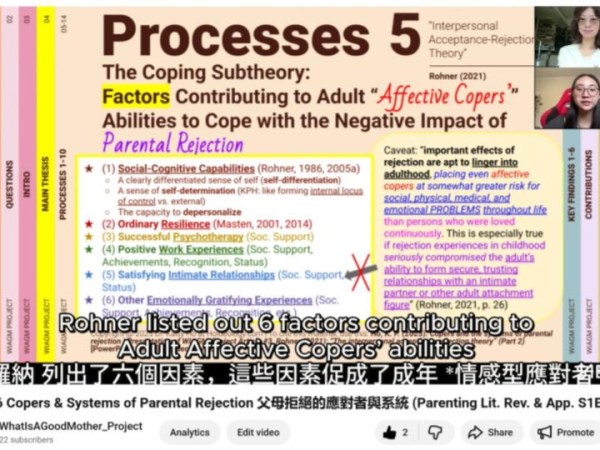
WIAGM_S1Ep6 Copers & the Systems of Parental Rejection
S1Ep6 (Ho & Chu, 2025, December 16) entitled “Copers and the Systems of Parental Rejection” examines Rohner’s (2021) coping subtheory that defines Affective Copers (20-40% of rejected individuals) and Instrumental Copers (60-80% of rejected individuals). We also explain in details Rohner’s description of the social-cognitive capabilities (namely, self-differentiation, self-determination, and de-personalization) that Affective Copers possess,…
| About The WhatIsAGoodMother_Project (WIAGM) Channel — by Dr. K. Ho (revised, May 23, 2026) HOST, AUTHOR, PRODUCER (POWERPOINT/SCRIPT WRITING & VIDEO-EDITING), EXECUTIVE PRODUCER, RESEARCH PRINCIPAL INVESTIGATOR: Dr. Katty P. Ho CO-HOST, UNDERGRADUATE RESEARCH APPRENTICE: Genie Chu THE WHATISAGOODMOTHER_PROJECT YOUTUBE CHANNEL provides scientific, research-based psychoeducation to the general public and professionals alike. We delineate scientific research processes and findings (through explaining parenting research literature or peer-reviewed journal articles) to make them accessible and easily understandable to lay people interested in the topic of parenting as well as students and professionals in the field. Our goal is to EXPLAIN scientific terminology and research findings on the impact of THE PARENTING EFFECT on CHILD OUTCOMES–as well as their IMPLICATIONS AND APPLICATIONS–to the general audiences. These general audiences include parents who are concerned about whether they have suitable parenting skills or not on their children, young people who are simply curious about these topics and aspire to become good parents in the future, and mature adults who want to know about how past events affected their present lives and how to improve their psychological well-being. Our videos are also suitable for viewers who are students and professionals in the areas of psychology, education, social work, counseling, or related areas, toward their own self-growth and professional development. 關於《什麼是好媽媽_研究》頻道 — by Dr. K. Ho (revised, May 23, 2026) 主持人、作者、製片人、執行製片人、首席研究員: Dr. Katty P. Ho 共同主持人、研究實習本科生: Genie Chu 《什麼是好媽媽_研究》頻道向公眾和專業人士提供科學的、基於研究的心理教育。我們描述科學研究過程和結果(透過解釋 “父母教養” 研究文獻或同行評審的期刊文章),使對 “父母教養” 主題感興趣的外行人士以及該領域的學生和專業人士能夠輕鬆理解。我們的目標是向一般受眾解釋有關 “父母教養效應對子女結局影響” 的科學術語和研究結果及其含義和應用。這些一般受眾包括那些擔心自己有否適合的教養子女技巧的父母、那些只是對這些話題感到好奇並渴望未來成為好父母的年輕人,以及想了解過去的事件如何影響他們現在的生活以及如何改善他們的心理健康的成熟成年人。我們的影片也適合心理學、教育、社會工作、輔導或相關領域的學生和專業人士觀看,以實現自我成長和專業發展。 |
- WIAGM_S1Ep8 COMMENTARY: Copers-Systems of Parental Rejection
- WIAGM_S1Ep7 COMMENTARY: The Problem of Parental Coldness
- WIAGM_S1Ep6 Copers & the Systems of Parental Rejection
- WIAGM_S1Ep5 The Problem of Parental Coldness
- WIAGM_S1Ep4 COMMENTARY: Short/Long-Term Effect of Parenting Style
 Hoideology